

In the previous article, I wrote about soul parts that, at some point in life, separated from our body and personality. Such a separation can leave behind a sense of emptiness and reduced vitality.
Systemic Ritual is one method that can help reconnect with these lost parts and, when the time is right, allow them to return.
But what actually happens after a ritual in which soul parts have been retrieved?
The First Experiences After Soul Retrieval
Many people report feeling more present after such a ritual: lighter, more alert, less dreamy, and stronger within themselves. It is also common for people to notice changes in their senses. Colours may appear brighter, sounds clearer, and smells more vivid.
In other words, there is often a renewed connection with the physical body. One feels more fully embodied again.
During the first few days, this can sometimes lead to a mild sense of disorientation. The healing still needs time to settle and find its place within the body and consciousness.
Similar experiences are sometimes reported after a family constellation. When an entanglement with an ancestor is released, it can also be understood as reclaiming a part of oneself. That part could not fully be present in the here and now because it was still connected to the trauma of a parent or ancestor.
Once the entanglement is resolved, that part can return to the present moment and take its place again in the client’s body and personality.
The Importance of Care and Timing
After a soul retrieval ritual, people may also find themselves feeling more emotional. When a lost soul part returns, the memory of the event that caused it to leave may also reappear — sometimes immediately, sometimes later.
For this reason, it is important to approach soul retrieval with care, especially in cases of severe trauma. A soul part that left because of a deep or overwhelming experience cannot always simply be brought back right away.
Sometimes the soul part itself first needs healing. In some traditions, it is said that a soul part may need to be brought to a place of healing — almost like a spiritual hospital — where it can recover before returning.
It is also essential that the client is strong enough to receive and care for the returning soul part. The environment must feel safe enough for the soul part to come back.
Welcoming Little Susanne
After a soul retrieval, many different emotions can arise: joy, sadness, anger, or even rage. These emotions are often connected to the process of remembering and integrating what has returned. And that process can take time.
During one of my own soul retrievals, I encountered my two-year-old self — the little Susanne.
In a visualisation, I saw her in a beautiful forest surrounded by cats, horses, birds, flowers, wide grassy fields, and streams of clear water. There were even two little gnomes there — Bop and Mieke, as she called them.
This was where she had hidden herself.
And she did not want to come back.
Over several weeks, I had to visit her again and again. Slowly, I befriended her and gently tried to convince her that it could also be safe and beautiful to return to the present moment — to my body and my personality.
Eventually, she agreed.
Welcome home, little Susanne.
When Memories Return
Shortly afterward I noticed an intense anger arising toward my mother and my older brother. I felt certain it was connected to the little Susanne who had returned.
When I spoke with her again, a memory surfaced.
I was two years old. My brother, who was five at the time, was playing roughly with me. The play got out of hand. He placed a pillow over my face and lay on top of it.
I could not breathe.
My small body fought to survive and suddenly found the strength to throw him off. I remember seeing the shock on his face before he ran away.
After that, everything went black.
My body survived — but a part of my soul had had enough and left.
When this memory returned, panic and fear surfaced again, followed by deep anger. Anger toward my brother for what had happened, and toward my mother for not having been there. Where had she been? Why had no one seen what was happening?
At first, I tried to comfort my younger self with rational explanations. I told her that it had been an accident and that a five-year-old child cannot fully understand the consequences of such actions.
But this was not what she needed.
My words did not acknowledge her fear, panic, anger, and sadness. She did not feel heard — and she disappeared again to her safe place in the forest with Bop and Mieke.
So once again, I had to go and bring her back.
This time I listened. Together we felt the fear again, the panic, the anger. We cried and cursed. And we honoured what had happened.
And we thanked my body — because it was my body that had saved me. Not my mind, but the instinct of my body had found the strength to survive.
Integration
After a soul retrieval ritual, the work is not yet finished. In many ways, it is only the beginning of the integration process.
A part of you that has been separated for years needs time to find its place again. It wants to be seen, heard, and respected.
There are many ways to support this process.
You can regularly connect with the returned soul part, for example, through visualisation or inner dialogue. If you are unfamiliar with this process, working with a therapist can be helpful.
Taking good care of yourself can also be very supportive. The soul part once left because there was not enough safety, joy, or space. By consciously creating moments of safety, rest, and pleasure, you show that these qualities are now present.
Bodywork can also be beneficial. Practices such as massage, shiatsu, acupuncture, or emotional bodywork help restore the flow of energy in the body. Trauma is often stored in the body, and when a soul part returns, the body may also begin to release long-held tensions.
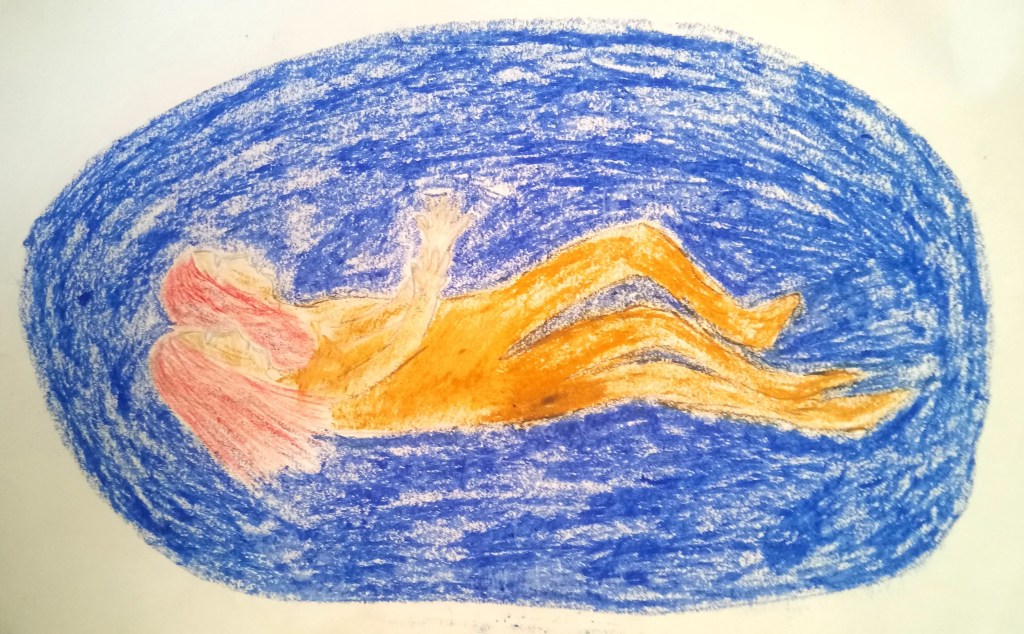
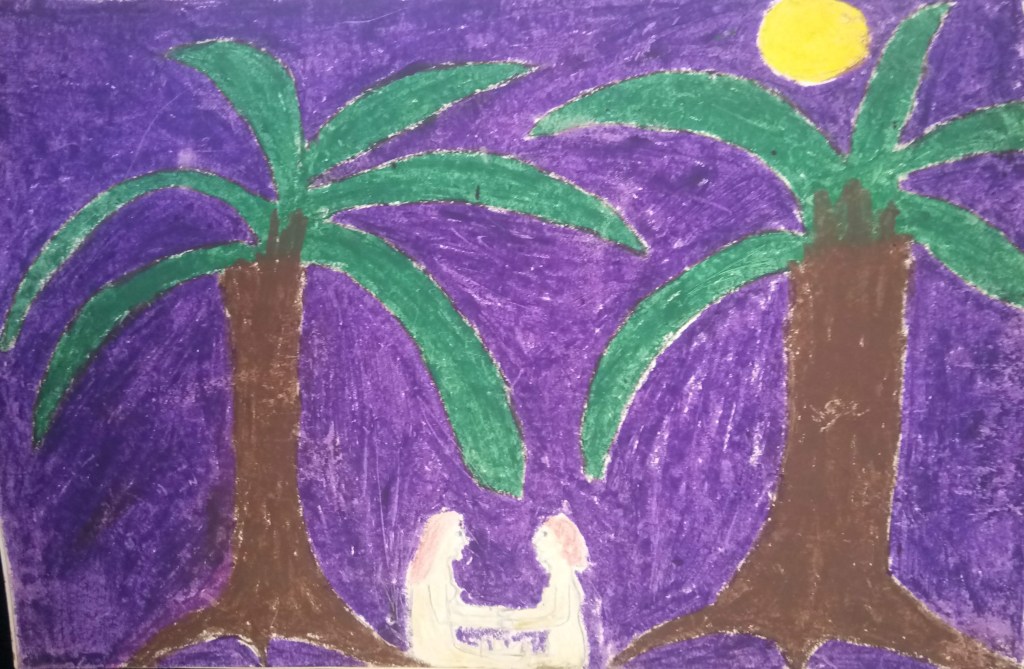
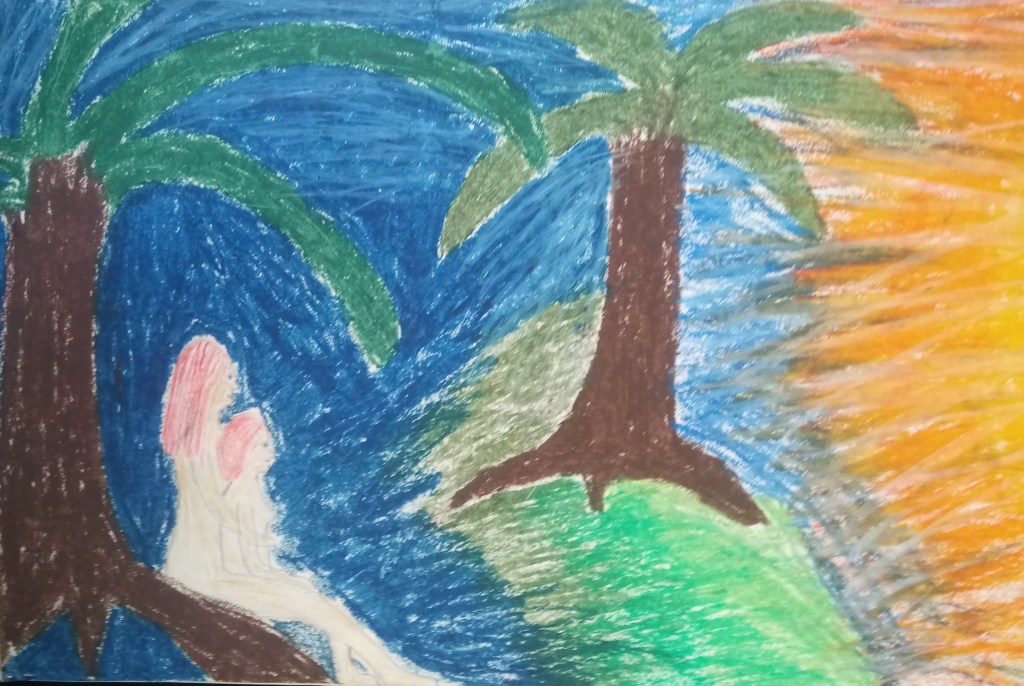
Creative expression can also support integration. The drawings included in these articles are my own. I created them intuitively after a soul retrieval. One drawing expresses how I felt a kind of “body” settling inside me. Other drawings reflect how I cared for the returned soul part by travelling with it in visualisations to warm, safe places where we could spend time together.
In some situations, it may also be wise to seek support from a psychotherapist or counsellor after a session. Especially when deep trauma is involved, professional guidance can help process what emerges.
Soul retrieval is not an endpoint.
It is the beginning of a journey — a journey of coming home to yourself.
For ONLINE workshops:
Inspired by:
Ingerman, S. Soul Retrieval. Mending the Fragmented Self
My own experiences
Notes made during my training with Daan van Kampenhout
 Systemic Ritual and Systemic Constellations