
Uit: Leerboek Familieopstellingen – Susanne Hazen
Introduction
As the days grow shorter and the air turns crisp, we enter a time of turning inward — a season when many cultures pause to remember those who came before us.
Across the world, early November carries a quiet mystery. It is said that during these days, the veil between the world of the living and the world of the dead grows thin, allowing us to sense the presence of our ancestors more closely.
From ancient Celtic Samhain to Mexico’s Día de los Muertos, this time invites us to honour the ones who walked before us — not in mourning, but in gratitude and celebration.
Ancestors hold a vital place in both Family Constellations and Systemic Ritual. Within these approaches, they are regarded as present and alive—not in our everyday reality, but in another dimension.
That is why both methods call for respect and awareness; they are not practices to take lightly.
👉 See for workshops ONLINE and Live – the Agenda
When the Veil Grows Thin
It is said that around the beginning of November, the veil between the world of the living and the world of the dead becomes at its thinnest.
During this time, contact with the “Otherworld” — the realm of ancestors, gods, saints, and spirits — is believed to come most easily.
Throughout history, myths and cultures have recognised this liminal moment. The Celts and Germanic tribes celebrated Samhain, while elsewhere people marked Halloween, All Saints’ Day (November 1st), All Souls’ Day (November 2nd), and Mexico’s Día de los Muertos.
Each carries the same essence: to remember and honour those who have passed.
Samhain – The Celtic New Year
For the ancient Celts and Germanic peoples, Samhain marked both the start of winter and the beginning of a new year. Traditionally beginning at sunset on October 31st and lasting three days, it was a time when the veil between worlds was believed to grow paper-thin.
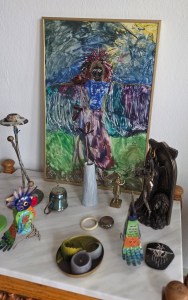
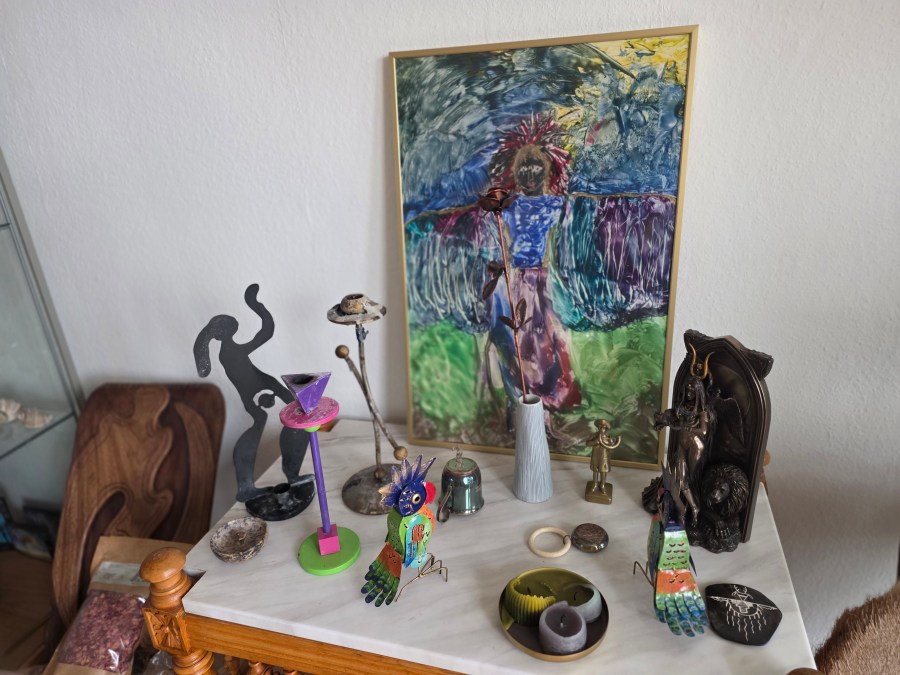
The dead were thought to return among the living. Families lit fires outdoors and hearths within, laid places at the table for their ancestors, and offered food both at the altar and outside for wandering spirits.
Despite its connection with death, Samhain was far from sombre—it was a joyful celebration of life, filled with laughter, music, and feasting.
The ancestors were welcomed, honoured, and consulted, receiving gifts and offerings. It was a way to stay connected, to give them their rightful place, and to transform grief into gratitude.
Samhain was also a harvest and thanksgiving festival, marking the close of the agricultural year. The gathered crops were stored, and livestock was either sheltered or sacrificed in thanks to the gods, nature spirits, and ancestors.
From Samhain to Halloween
When Irish and Scottish immigrants brought their Samhain traditions to North America in the 19th century, these evolved into Halloween — All Hallow’s Eve.
Today it’s celebrated widely across the U.S., Canada, and Europe, though its deeper meaning is often forgotten, replaced by the lighthearted fun of trick-or-treating.
All Saints’ Day and All Souls’ Day
All Saints’ Day, on November 1st, is a Christian feast day. On this day, the Roman Catholic Church honours and venerates all saints.
All Souls’ Day, on November 2nd, is dedicated to remembering all the departed.
Until the early 7th century, these Christian feasts were celebrated in May.
However, in the Netherlands, the first Wednesday of November was also once a festive day — a harvest thanksgiving, originally a pagan celebration.
To help the people accept Christianity more readily, the Church moved All Saints’ Day and All Souls’ Day to November 1st.
As a result, the ancient folk traditions merged with the Christian ones, blending older customs with the new faith.
Día de los Muertos – The Day of the Dead
In Mexico and parts of Latin America, early November brings the vibrant Día de los Muertos, a three-day festival rooted in ancient indigenous traditions.
Like Samhain, it is a joyful remembrance rather than a mourning. Families build altars for their loved ones, decorating them with food, drinks, and gifts.
Cemeteries come alive with colour and sound—people sing, eat, and dance among the graves, celebrating the continuity of life beyond death.
Originally held in early August, the festival was moved to November under Catholic influence, aligning with All Saints’ and All Souls’ Days.
✨ Closing Reflection
Across cultures and centuries, early November invites us to turn toward our ancestors—not with fear or sorrow, but with gratitude and celebration.
In doing so, we honour the roots from which we come and keep alive the unseen threads that connect us all.
 Systemic Ritual and Systemic Constellations