
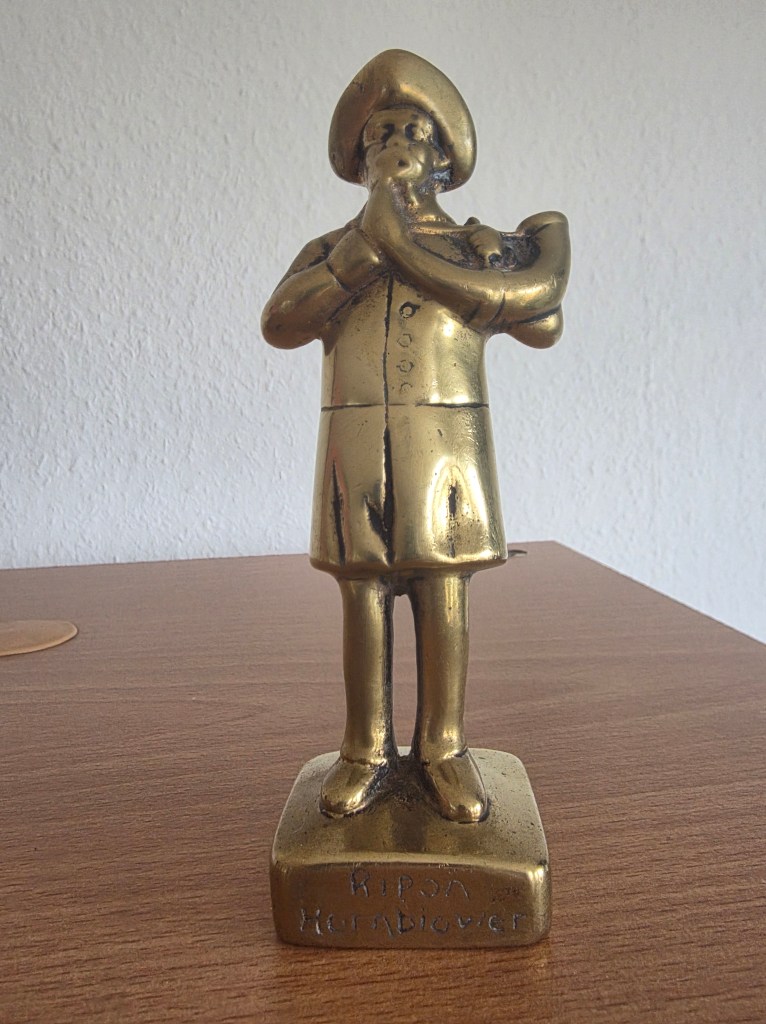
On my altar, I have four figurines representing the four ancestral lines of my parents: my maternal grandmother’s line, my maternal grandfather’s line, my paternal grandfather’s line, and my paternal grandmother’s line. Each figure symbolises the gifts I may receive through that particular lineage.
When I attune myself to the ancestors of my maternal grandfather’s lineage, I see a long line of men before me. Men in work clothes. Ordinary, hard-working men – labourers, farmers, men who worked with their hands.
But among them, I also see a few men who catch my attention.
They are blowing a horn.
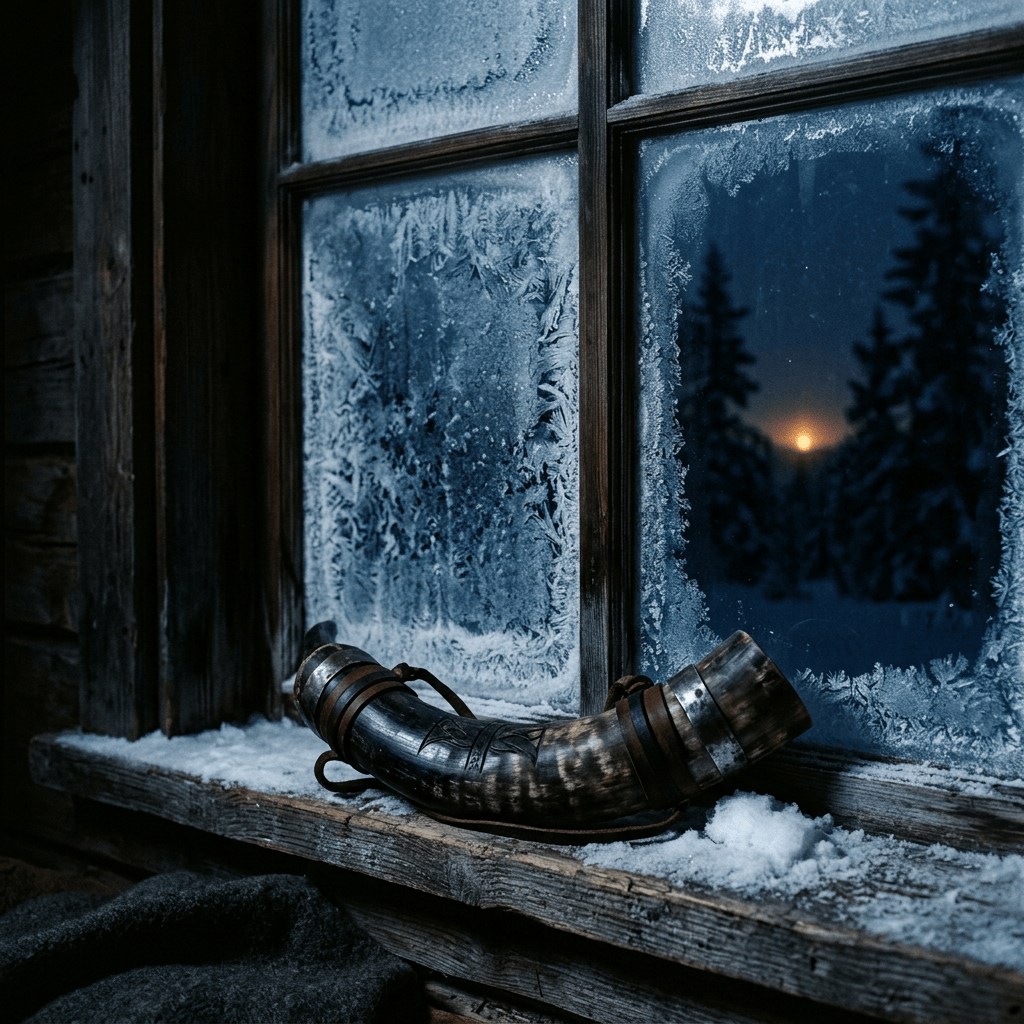
Perhaps it is a hunting horn, I think at first, or a midwinter horn. I hear no melody. Just one long note.
Not long after I had attuned myself to this ancestral lineage, I went walking in Gelderland. My grandfather, my mother’s father, came from Gelderland.
That evening, I was sitting in a small restaurant when I suddenly heard a horn outside.
That note.
Of course, I was surprised. A little later, the man who had been blowing the horn came into the restaurant. It turned out that it was indeed a midwinter horn.
I found it remarkable that this particular sound crossed my path so soon after my encounter with the ancestors of my maternal grandfather’s lineage.
The midwinter horn
The midwinter horn is a long, slightly curved wooden horn traditionally played in the eastern Netherlands, particularly in Twente and the Achterhoek, as well as in neighbouring regions of Germany. The horn is traditionally made from woods such as alder, willow or birch.
Its sound is simple and penetrating. No complicated melodies, but a series of natural notes that can carry far across the landscape.
Various stories and theories exist about the origins of the midwinter horn tradition. The tradition as we know it today has, in any case, been associated with the dark time of the year for centuries. Nowadays, the horn is traditionally played from the first Sunday of Advent until Epiphany.
Old stories also connect blowing the horn with the winter solstice, driving away darkness or evil forces, and welcoming the returning light.
Whether the present-day tradition truly reaches all the way back to such pre-Christian rituals, we do not know.
But the image touches me.
In the darkest time of the year, a note sounds across the land.
A call through the darkness.
And then, slowly, the light returns.
For me, the gifts of this ancestral lineage lie in simplicity and music.
I recognise that simplicity in the men I see before me. Men who worked hard, with their hands, close to the land and to the ordinary rhythms of life.
And then there is the music.
I hear only one note, yet when I listen, it feels as though an entire melody is coming towards me.
I recognise the gift of music in myself and in my family on my mother’s side. When I was young, my mother did everything she could to make sure that my brothers and I had music lessons and learned to play an instrument. She herself once played the zither, but she did not have the same opportunities that we had and had to give it up.
I no longer play an instrument myself, but my music lessons and playing the flute remain among my most cherished childhood memories.
Will you journey with me?
In the autumn, the course *Connecting with Your Ancestors* will take place again in Amsterdam.
Discover the power and gifts that come to you through your ancestors.
Will you be there?
Prior to these live days in Amsterdam, there are also ONLINE circles around this theme.
See for more information, the leaflets below:
For this blog, I gratefully used AI as a conversation partner—an external resource that helped me find words for what was already unfolding within me.

