
On February 4, 2026, the sun stands exactly halfway on its journey from the Tropic of Capricorn to the equator. Astronomically, this marks the precise midpoint between winter and spring. This day is known as a cross-quarter day and is recognised in various traditions as Imbolc or Candlemas.
The Earth slowly begins to warm. The light returns, almost unnoticed at first, and the earliest flowers start to appear. Winter loosens its grip. Not yet visible in full bloom, but clearly stirring beneath the surface.
What Is Imbolc?
Imbolc is traditionally celebrated from the evening of February 1st. The ancient Celtic festival began on January 31st, and similar seasonal celebrations can also be found in Scandinavian traditions.
While Imbolc is often observed at the beginning of February, the true astronomical midpoint in 2026 falls on February 4th. A subtle yet powerful moment. The days are visibly lengthening, and life begins to stir again—quietly, gently. This is the hidden turning point between winter and spring.
A Festival of Light, Purification, and Promise
Imbolc is one of the important seasonal festivals rooted in pre-Christian Celtic traditions, closely connected to the fertility of the earth. Originally, it was a ploughing and sowing festival—a time to prepare the fields for new life, supported by the power of the goddess Brigid.
Imbolc symbolises purification, new beginnings, growth, and the awakening of life after the long winter months. Across cultures, this moment in the year has long been marked by rituals of cleansing and preparation.
This theme of purification is still reflected today in the tradition of spring cleaning during February. Not merely practical, but symbolic: releasing the old and making space for the new. The name of the month itself points to this—februa is Latin for purification. Fasting, too, traditionally belongs to this time of transition.
The word Imbolc is thought to derive from the Old Irish oimelc, meaning “ewe’s milk.” It refers to the first ewes producing milk in preparation for the birth of spring lambs—a tangible sign that the cycle of life is beginning anew.
Later, this ancient festival was absorbed into Christianity and associated with Saint Brigid and Candlemas. Yet its essence remained unchanged: light overcoming darkness, purification, and the promise of growth.
Brigid – Guardian of Fire and Life
Imbolc is inseparably linked to Brigid (or Brighid), the Celtic goddess of fire, smithcraft, healing springs, fertility, and hearth and home. She is the keeper of the sacred flame—both literally and symbolically.
To honour her, homes were ritually cleaned. Not simply to tidy up, but to consciously release what no longer serves and create space for the return of life.
Fire plays a central role during this festival. Candles, hearth fires, and flames symbolise the growing strength of the sun and the awakening life force within nature. It is a celebration of light, hope, and renewal.
Imbolc and the Wheel of the Four Directions
Within the Wheel of the Four Directions, Imbolc falls between Midwinter (the winter solstice) and the Spring Equinox. It marks the true beginning of spring.
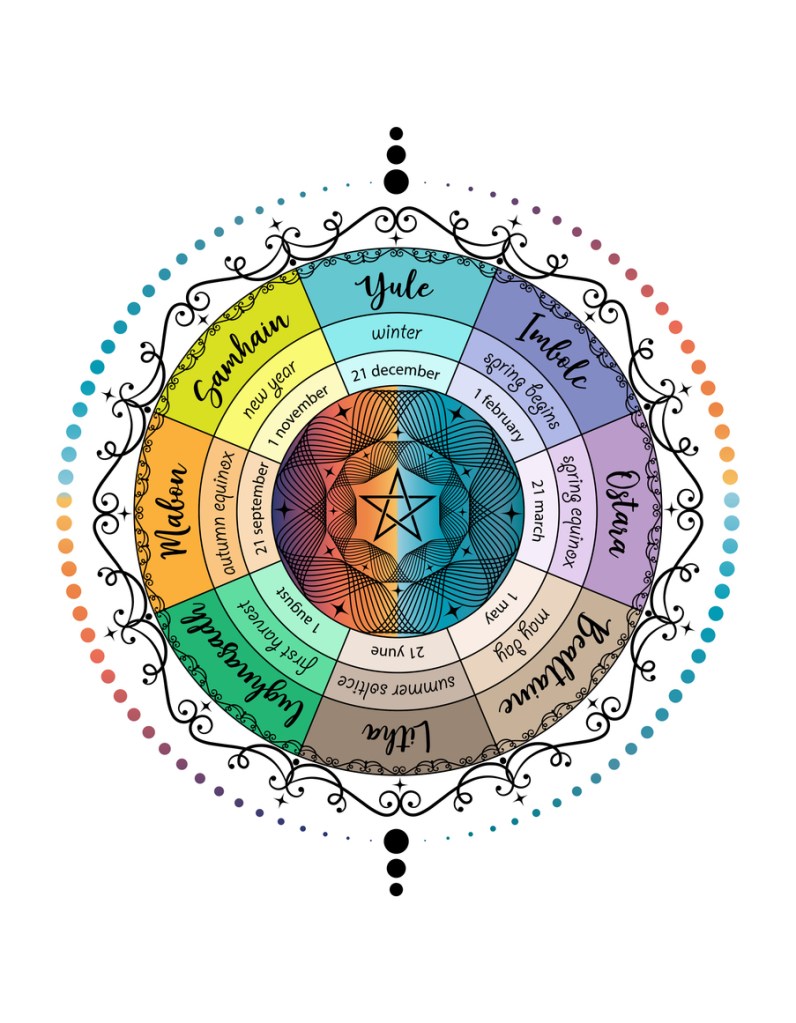
On the wheel of the seasons, this moment belongs to the northeast. Within the wheel of life phases, the northeast represents conception—the very first beginning of life.
This is where the spark ignites.
Still fragile. Still tender.
Yet full of potential.
Energetically, this is a powerful time to plant something new. Not through immediate action, but through intention. A vision may arise. First ideas can quietly take shape. What will later bloom begins here.
What Do You Wish to Grow?
This time of year invites us into stillness.
Into listening for what wants to awaken within us.
What do you wish to manifest this year?
Which intention deserves your care, attention, and protection, so it may grow into something tangible in the months ahead?
Just as the earth prepares for new life, we too are invited to create space.
By letting go of what no longer serves.
By welcoming the light.
And by trusting the natural rhythm of growth.
Spring is on its way.
And everything begins with a single spark. ✨
A Simple Ritual for New Beginnings
This ritual can be done around early February, at a moment that feels right for you.
1. Light a candle
Choose a white or soft yellow candle if possible. Take a moment to connect with the light and the returning sun.
2. Cleanse your space
You can do this by opening a window, tidying up, or burning sage, palo santo, or any herb that feels right to you. Consciously release the energy of winter.
3. Set an intention
Write down one word or sentence that represents what you wish to grow this year. Not something you have to achieve, but something that wants to be born.
4. Close in silence
Place the paper near the candle or in a place that is meaningful to you. Then let it go. Trust the process. Growth follows its own rhythm.
This time does not ask for urgency.
Only for attention.
Spring is already working beneath the surface.
And so are you. ✨
If you want to learn more about The Four Directions, I welcome you to join the ONLINE course “The basics of Systemic Ritual – connecting with resources that give strength/support – the wheel of the four directions” starting Monday, March 23.
Inspired by:
https://nl.wikipedia.org/wiki/Imbolc
https://castlefest.nl/nl/nieuws/vana-grimoire-imbolc
https://www.beleven.org/feest/imbolc
globalheart.nl/spiritualiteit/wat-is-imbolc-hoe-het-te-vieren
 Systemic Ritual and Systemic Constellations
Dear Susanne
This ritual comes at a perfect time. Blessed Imbolc.
Candyce
LikeLike
Yes. Enjoy your purification and new beginning. Blessed Imbolc.
LikeLike