
By Susanne Hazen, author Leerboek Familieopstellingen
There are wounds you cannot see, yet they deeply shape how you live, love, and experience yourself. The mother wound is one of them. It develops in the relationship with your mother and can show up in subtle, but also very visible ways, in your daily life.
Your mother is your first connection to life. Through her, you receive not only physical nourishment but also your first experience of love, safety, and belonging. She is the foundation in which you learn whether you are welcome, whether you are allowed to receive, and whether you can trust that life will support you.
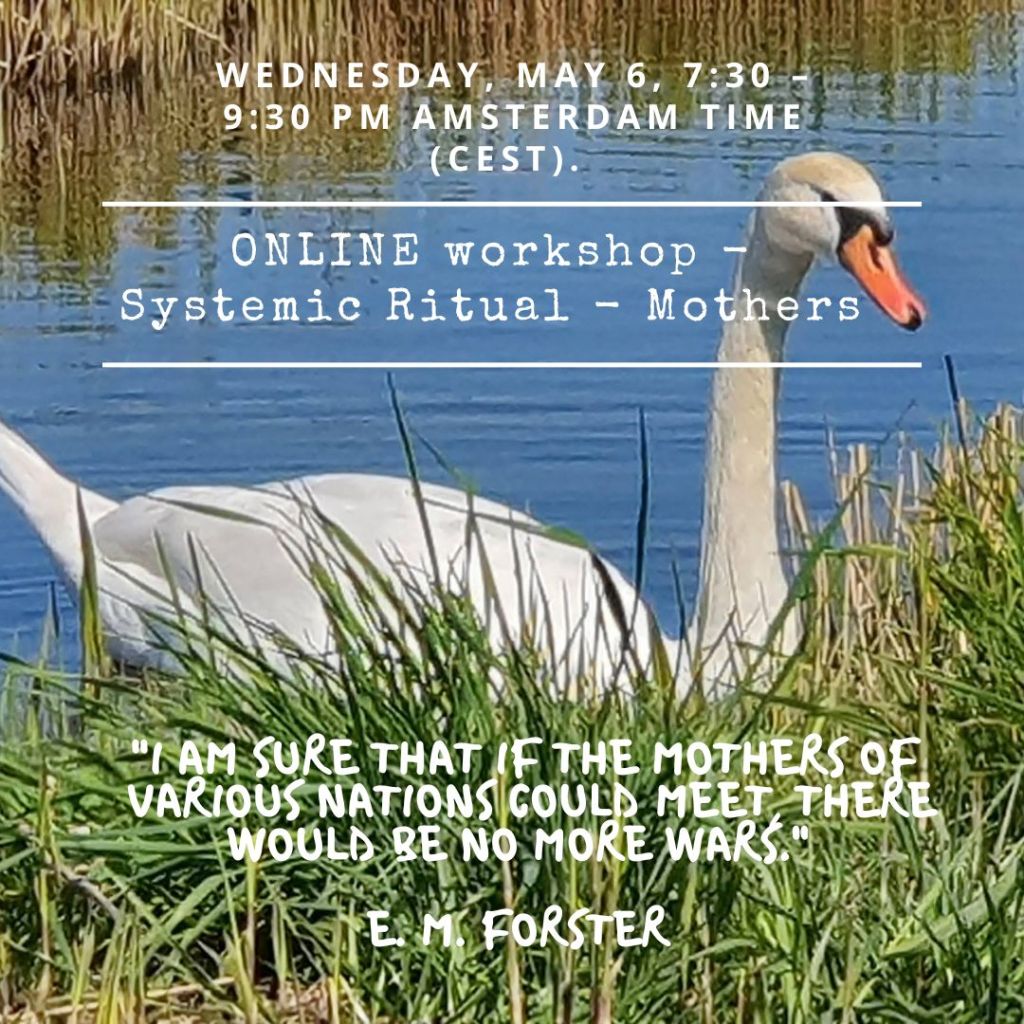
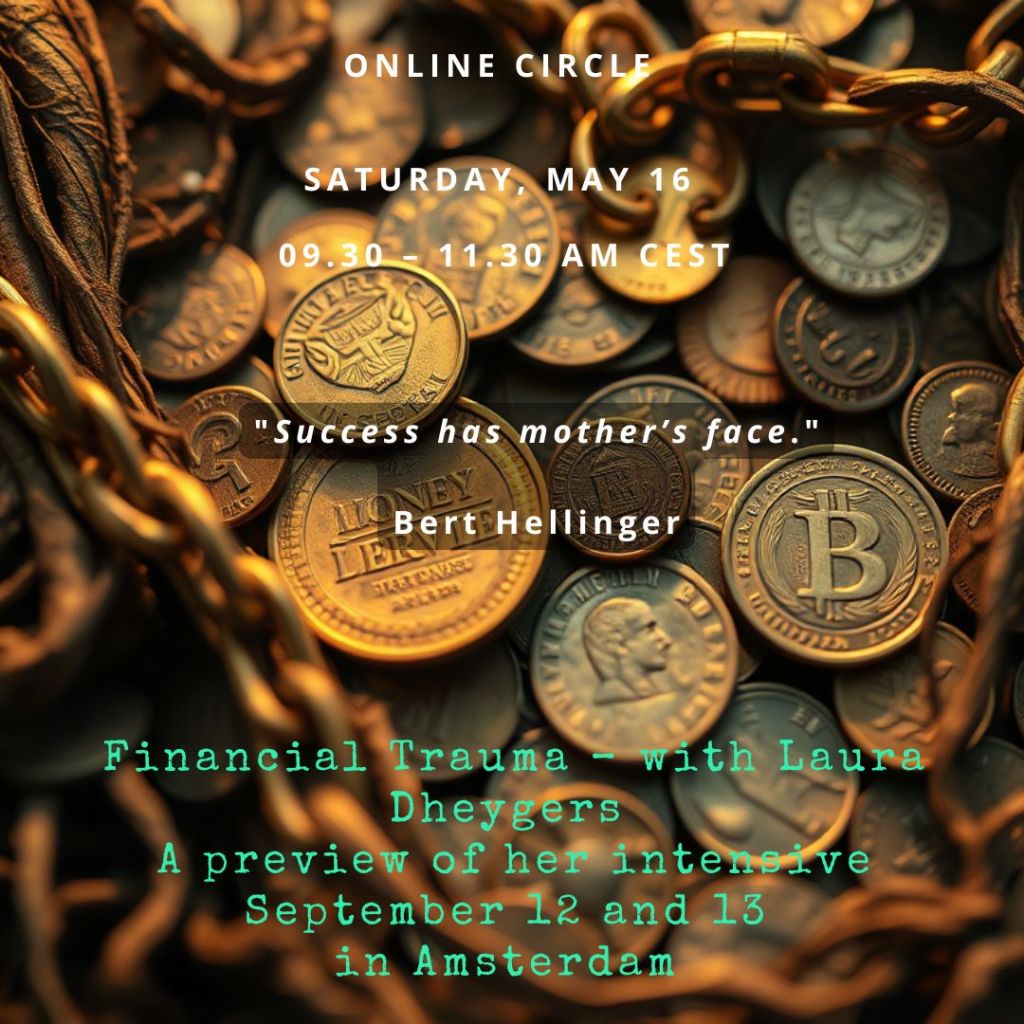
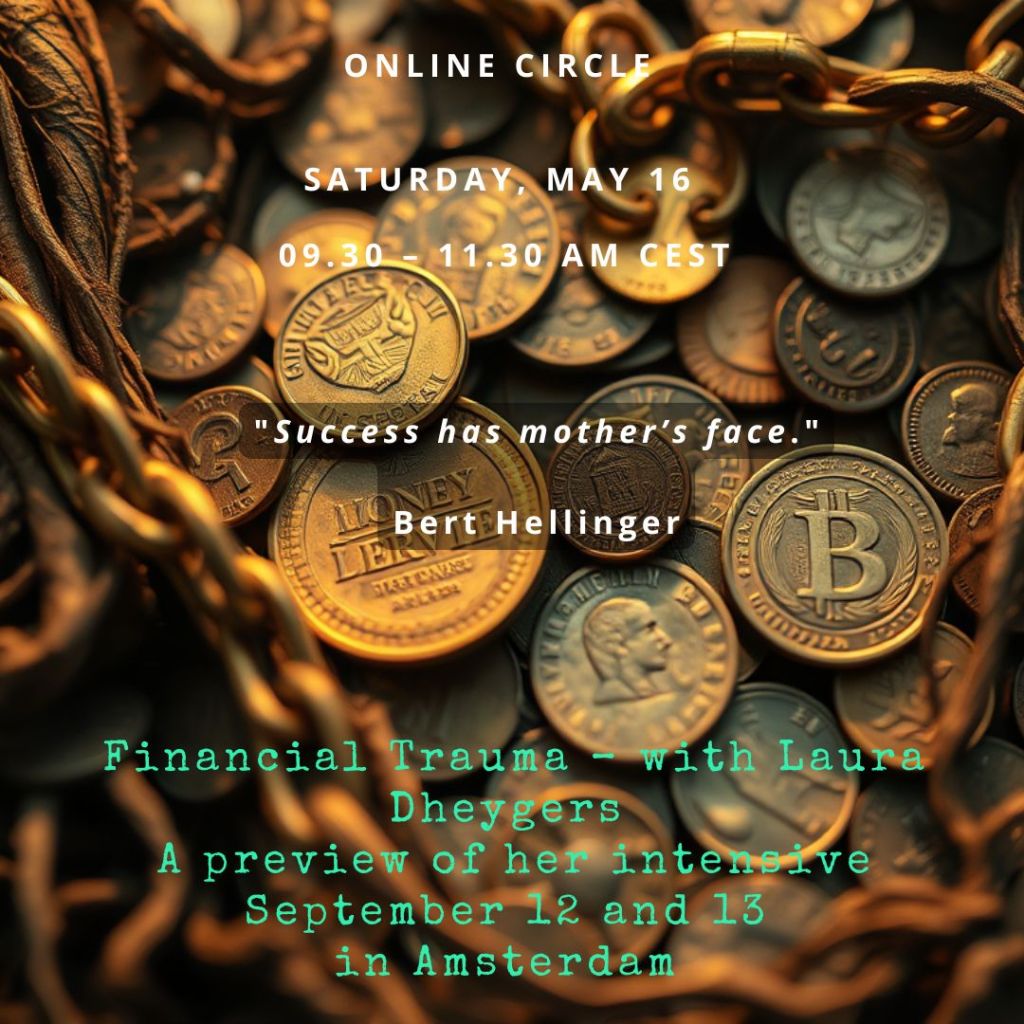
Click on the images to navigate to more information about the online workshop
In systemic work and family constellations, the relationship with the mother is seen as a key foundation for your inner balance. This connection influences your ability to receive love, to allow abundance, and to feel supported by life itself. When this bond is disrupted or damaged, it can affect different areas of your life: your relationships, your work, and how truly alive you feel.
In this article, you will discover what the mother wound is, how to recognise it, and which inner movements can support healing.
The Mother Wound
The mother wound refers to emotional pain that arises when, as a child, you were not fully seen, heard, or supported by your mother.
This can have different causes:
An absent or emotionally distant mother
This can leave a deep sense of emptiness and make it difficult to truly receive love.
An overprotective mother
When there was little room for autonomy, it may later lead to insecurity and difficulty making your own decisions.
Experienced rejection
This can translate into a deep fear of abandonment or a feeling of not truly belonging.
Exclusion within the system
When your mother herself was excluded, judged, or not acknowledged, you may unconsciously carry part of that burden.
In systemic work, this is called entanglement: unconscious connections in which you carry something that does not belong to you. Without realizing it, you are no longer fully standing in your own place.
The First Mirror
As a child, you are completely dependent. You learn who you are through the eyes of your mother. She is your first mirror.
When that mirror is incomplete or distorted, beliefs may form such as:
- I am not good enough
- I have to adapt to receive love
- My needs do not matter
These beliefs settle deeply within you and often travel unconsciously into adulthood.
How to Recognize the Mother Wound
The mother wound often becomes visible through recurring patterns, such as:
- difficulty setting boundaries
- focusing strongly on others while neglecting yourself
- sensitivity to rejection or criticism
- perfectionism or a strong need to prove yourself
- difficulty receiving (love, help, recognition)
- a deep, hard-to-place sense of longing or lack
You may also notice that you:
- feel responsible for others very quickly
- take on emotions that are not yours
- feel like you have to do everything on your own
- keep longing for something you never fully received
These are signals that something within you still wants to be seen, acknowledged, and felt.
The Impact on Your Life
The relationship with your mother forms the foundation of how safe you feel in the world. When that foundation is unstable, it often affects multiple layers of your life:
- your self-image
- your relationships
- your sense of self-worth
- your ability to trust
It is important to realize: what once developed can also begin to shift. Healing is possible.
The Movement Toward Healing
Healing the mother wound is not a quick fix. It is an inner process that unfolds step by step. Within systemic work and family constellations, several movements can support this process.
Taking Your Mother as She Is
An important step in healing is learning to take your mother as she is: with her strengths, her limitations, and her pain.
This does not mean you have to approve of everything. Nor does it mean you cannot set boundaries. It means that, internally, you stop fighting the reality of who she was or still is.
This inner movement may sound like:
You are my mother. From you, I received life. I take you as my mother.
This shift does not happen overnight. But within this movement, a sense of peace often begins to arise. There is more space, more softness, and a deeper connection with yourself.
Returning What Is Not Yours
Many children, often out of love, carry something of their mother’s pain. They try to ease her suffering, compensate for what was missing, or unconsciously carry her burden. But a child cannot truly carry the mother’s load.
In family constellations, it can be healing to return what does not belong to you, in a respectful and gentle way.
For example, with inner sentences such as:
I wanted to carry something for you, but I cannot. I give it back to you.
I have felt your pain as if it were mine. Now I leave it with you. I am the child, and you are the parent.
In returning what is not yours, a sense of relief often arises — not only for you, but within the system as a whole.
Taking Your Own Place
Within every family system, there are natural orders that give direction to each person’s place. When this order is disrupted, it can create inner tension or confusion.
Children need their own place: as children in relation to their parents — not above them, not in between them, and not in the role of rescuer, partner, or caretaker. When you reclaim your own place, a sense of calm often follows. You no longer have to carry what does not belong to you, and you can simply be the child.
Reconnecting with the Mother Energy
The mother is not only about the person herself, but also about what is often called the mother energy in systemic work: receiving, being held, nourishment, softness, and permission to exist.
When the relationship with your mother is wounded, access to this energy can also be disrupted. Through systemic work, it becomes possible to reconnect with this inner source, allowing you to experience more support, acceptance, and trust.
Healing does not always mean that the relationship with your mother changes in the outside world. Often, the most important shift happens within you.
Returning to Yourself
As the relationship with your mother comes more into balance, a greater openness to life often emerges. Where the mother wound once pulled you away from yourself, healing invites you to return.
This means:
- learning to feel and acknowledge your own needs
- taking your boundaries seriously
- developing gentleness toward yourself
- exploring and releasing old beliefs
In a way, you learn to “mother” yourself: with care, presence, and compassion.
Your Inner Child
An essential part of this process is reconnecting with your inner child — the part of you that once lacked something, and is still present within you.
By consciously connecting with what you needed back then, you can begin to offer it to yourself now:
- comfort
- acknowledgment
- safety
- love
This is not a quick solution, but a process of gently peeling back layer by layer — learning to listen again to what has long remained unseen within you.
Final Thoughts
Healing the mother wound is not a straight path, and it has no fixed endpoint. It is a movement inward — toward truth, softness, and space.
Perhaps that is the essence: that you gradually begin to give yourself what you once missed. Not by returning to how it should have been, but by becoming more present with what is alive within you now.
Because you are worthy of meeting yourself — fully, and exactly as you are.
In future blog posts, we will explore these dynamics further through the lens of Family Constellations. Don’t forget to follow me!!!
Inspired by:
Hazen, S. Leerboek Familieopstellingen

