
By Susanne Hazen, author Leerboek Familieopstellingen
The relationship with your mother plays a fundamental role in how you connect with others in intimate relationships. The way you are internally connected to her can shape how you experience love, closeness, safety, and dependency in your adult partnerships.
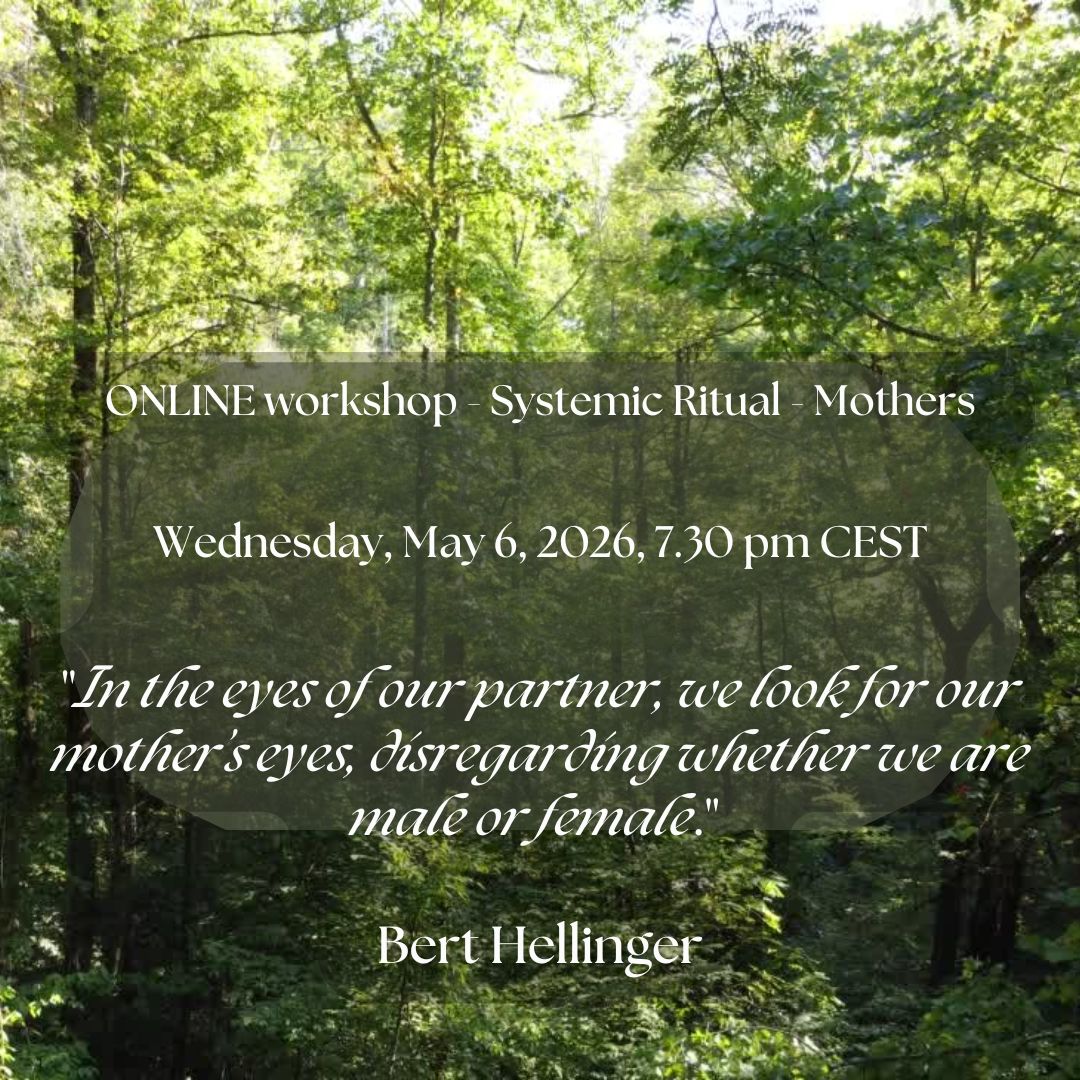
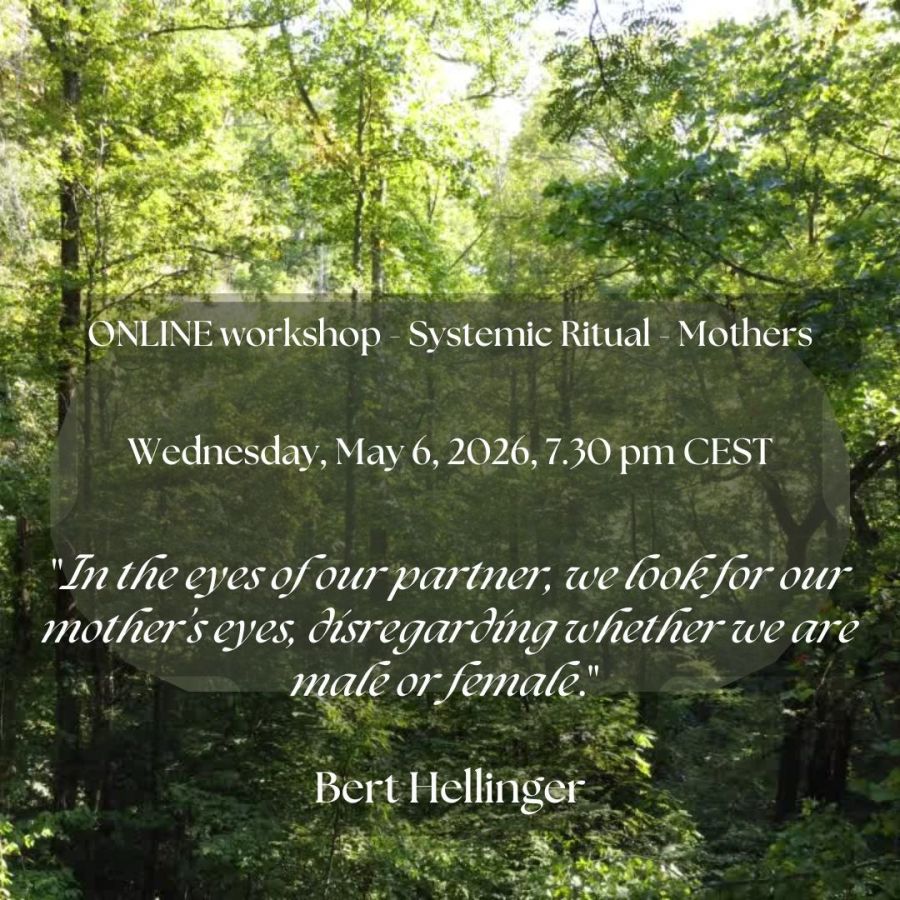
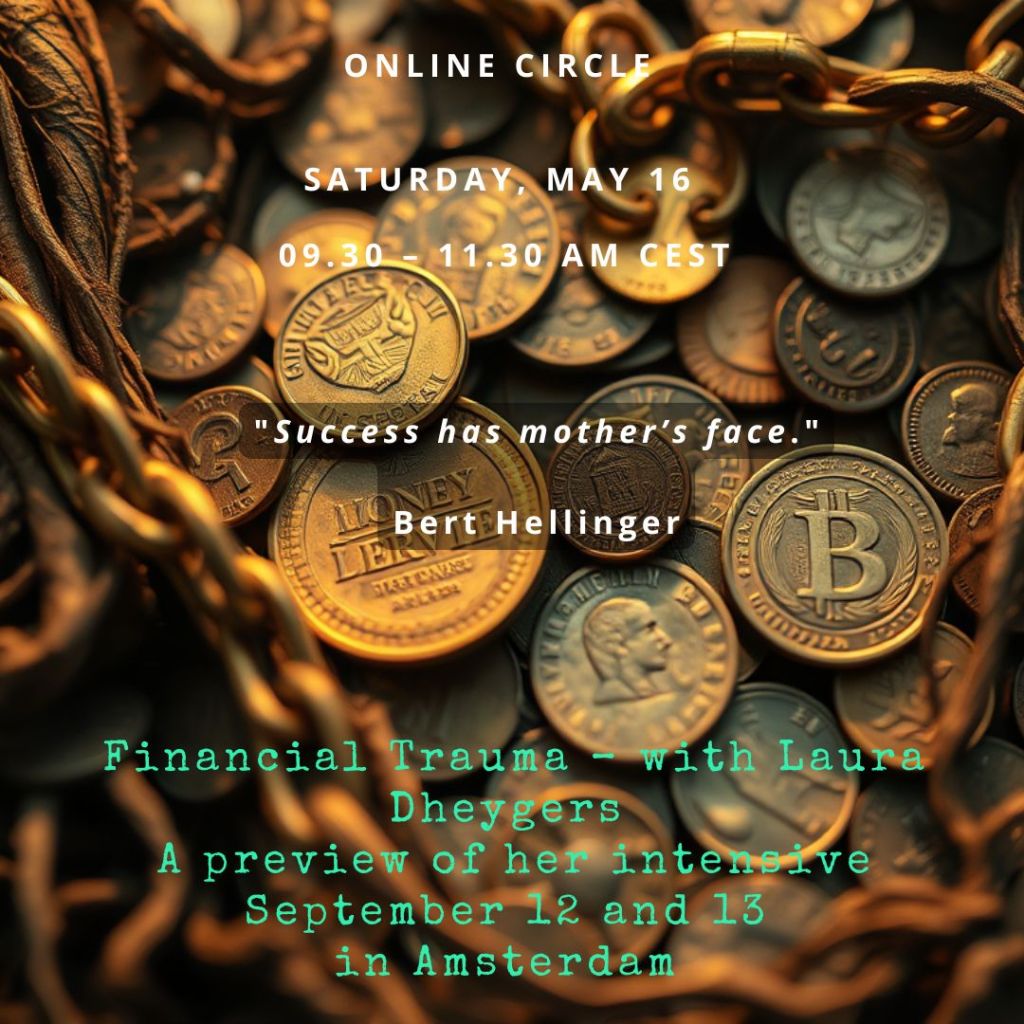
Click on the images to navigate to more information about the online workshop
The Parent–Child Relationship as the Foundation
No parent is perfect. A child’s needs are vast, while parents are naturally limited in what they can provide. Even the most loving and aware parent cannot meet every need.
Parents give what they are able to give — based on their own capacity, history, and life circumstances. And this does not always fully align with what a child needs.
As a result, many people carry what could be described as an “inner space of unmet needs.”
Often unconsciously, we long for someone else to fill that space.
Falling in Love: The Illusion of Fulfilment
At some point, we fall in love.
There can be a strong sense of recognition, connection, and even a feeling of “coming home.” It may feel as though we have finally met someone who truly sees us and can give us what we have been missing.
However, in many cases, we are not seeing the other person fully.
We are looking through the lens of our desires, expectations, and earlier experiences. The deeper the unmet need, the stronger the tendency to idealise the other.
Desire can cloud perception.
When the initial intensity of falling in love fades, and the other person cannot meet these deeper needs, feelings of disappointment may arise. Old emotions — including pain or anger — can surface and become directed toward the partner.
Why Relationship Patterns Repeat
At that point, different responses are possible:
- Ending the relationship and seeking a new partner
- Becoming discouraged and losing trust in relationships
- Or turning inward through self-reflection
The latter often opens the door to more sustainable change.
By developing awareness and taking responsibility for your own inner experience, space is created for a different kind of connection — one that is less driven by expectation and more grounded in reality.
An important part of this process is exploring your early relationships, especially the one with your mother.
We Bring Our History Into Our Relationships
When two people enter a relationship, they each bring their own background — including family dynamics, cultural influences, and emotional history.
In that sense, a relationship is the meeting of two inner worlds.
When these worlds are not easily integrated, tension can arise. Sometimes this may lead to recurring conflict or even separation.
Often, these conflicts are not only about the present moment, but are connected to earlier, unresolved experiences.
Understanding Intense Emotional Reactions
Anger, in itself, is a natural and healthy emotion. It helps us set boundaries and respond when something feels off.
However, when emotional reactions seem disproportionate to the situation, it may point to something deeper.
We then speak of disproportionate anger — anger that is “contaminated” with old emotions. These reactions can be connected to:
- earlier life experiences, particularly in childhood
- or patterns that have been carried through generations
This “contaminated” anger shows up as intense emotional reactions that don’t match the situation. When conflict arises in a relationship and one or both partners display disproportionate anger, it is often not about the conflict itself. Instead, the conflict acts as a trigger for old childhood emotions, the inner child making itself known, or even inherited anger from previous generations.
In the latter case, it is as if entire lines of ancestors — who have carried this anger for generations — become visible through that emotional outburst.
Without awareness, these patterns can be difficult to recognize, let alone change.
The Mother Wound in Relationships
Many relational patterns can be traced back to one primary relationship: the relationship with the mother.
From a systemic perspective, it is often observed that:
- Women may unconsciously relate to both parental figures through their partner
- Men may more strongly project aspects of their mother onto their partner
In other words, our partners can, at times, represent unresolved dynamics from earlier relationships.
Unmet Needs and Expectations in Relationships
When early relationships are experienced as incomplete, an unconscious expectation can arise:
“You should give me what I didn’t receive.”
However, no partner can fully meet these deeper, earlier needs.
When this expectation is present, it can lead to disappointment, frustration, and tension within the relationship.
And sometimes, it doesn’t stop there.
What You Didn’t Receive From Your Parents, You Cannot Get From Your Partner
Parentification: When Children Fill the Void
If unmet needs are not fulfilled by the partner (and, once more, the partner cannot), they may be unconsciously shifted onto children.
- A mother may look to her son to fulfil what she missed in her relationship with her own parents
- A father may do the same with his daughter
Children are then placed in a position that does not belong to them. They are no longer seen for who they truly are, but are pushed into a role that makes them bigger or more capable than they can be.
After all, they are just children.
Children are highly sensitive to their parents’ emotional states and needs. Out of love and loyalty, they may try to meet needs that are not theirs to carry.
They begin to take care of their parent, a dynamic known as parentification.
While this often happens unconsciously, it can create inner conflict. Over time, this may lead to confusion, emotional tension, and suppressed anger — which can later surface in adult relationships.
The Impact on Adult Relationships
These early dynamics can influence how we relate to others later in life.
- Daughters may struggle in relationships with men
- Sons may struggle in relationships with women
The anger that actually belongs to the parent is projected onto the partner.
At the same time, there can be an unconscious tendency to choose partners who resemble aspects of our parents — as if attempting to resolve something unfinished.
However, this often reinforces the pattern rather than resolving it.
Healing the Mother Wound for a Healthy Relationship
As long as we expect a partner to resolve our earlier pain, we may remain in a dynamic that resembles the parent–child relationship.
A more mature form of love becomes possible when we take responsibility for our own inner world.
Healing the mother wound — and, for women, also the father wound — can support a deeper and more balanced connection.
Not because another person completes us, but because we develop the capacity to be present with ourselves.
In Closing: What Is True Connection?
It is not necessary to be “fully healed” to be in a relationship. Many relationships function because partners are aligned in their level of awareness and development.
At the same time, personal growth can shift relational dynamics. Sometimes partners grow together — and sometimes they grow in different directions.
In relationships where unresolved pain remains largely unconscious, there can be a tendency toward fusion — where boundaries become unclear, and individuals lose a sense of themselves.
This can feel like closeness, but it is often a way of avoiding deeper discomfort.
Over time, this may lead to unhealthy or even unsafe dynamics.
True connection emerges when two individuals can stand side by side — each grounded in themselves, while remaining open to the other.
Inspired by:
Hazen, S. Leerboek Familieopstellingen
Seminars gevolgd bij Bertold Ulsamer en Ingala Robl
https://holistik.nl/relatie-moeder-els-van-steijn/

