
By Susanne Hazen, author Leerboek Familieopstellingen
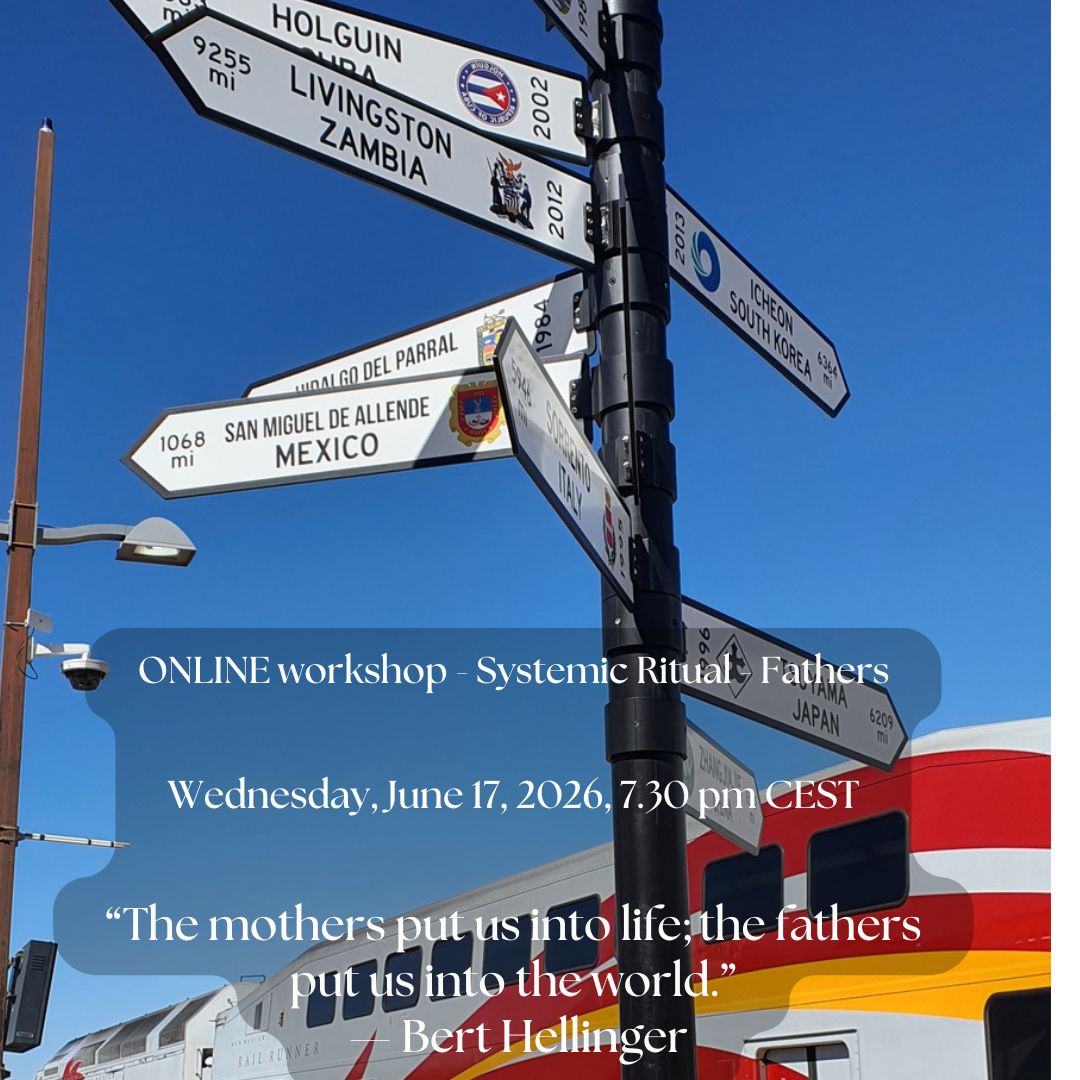
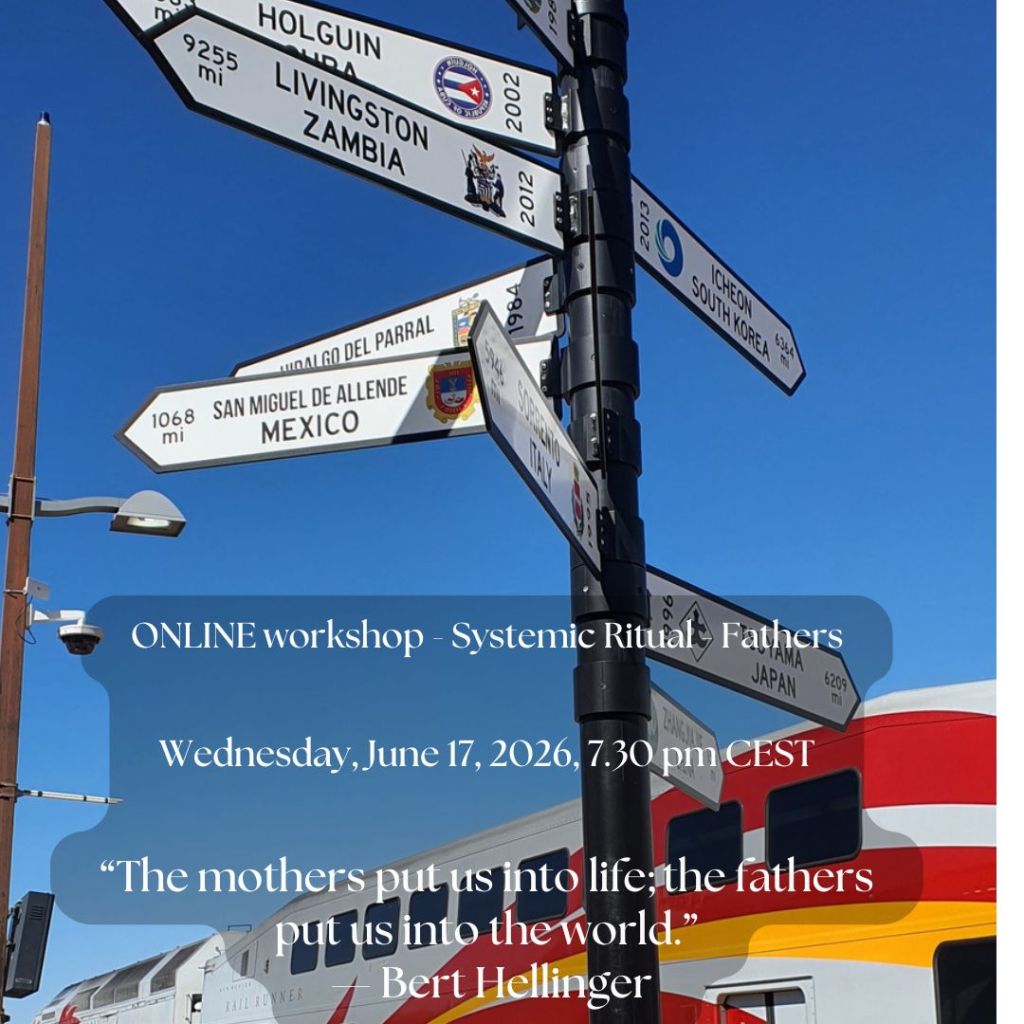
“The mothers put us into life; the fathers put us into the world.”
— Bert Hellinger
This article is about fathers — not only our personal fathers, but also the deeper inner image of Father that lives within the human psyche.
For most of us, this inner image is shaped by our experience with our biological father. Yet our psyche also carries a more universal image of Father: the archetypal Father. We encounter this figure in myths, fairytales, ancient stories, and spiritual traditions across cultures worldwide.
Whether we like it or not, this inner image of Father influences us more deeply than we often realise. It shapes our relationship with masculine energy and affects how we move through the world.
Without healthy access to masculine qualities, we may struggle with important aspects of life, such as:
- Making decisions
- Taking responsibility
- Setting boundaries
- Focusing on goals
- Developing autonomy
- Logical and rational thinking
- Independence
- Inner strength and vitality
In this article, we will explore the Father archetype, the roles traditionally associated with it, and several dynamics observed in Family Constellations work. We will also look at how Systemic Ritual can support healing wounds connected to the father relationship.
“If mom is the gateway to life, dad is the portal to the world.”
— Marina Toledo
The Primary Roles of the Father
Across many cultures and traditions, fathers have historically embodied three important roles: protector, provider, and guide or disciplinarian.
Of course, modern parenting is far more fluid than traditional role divisions suggest. Mothers often fulfil these roles as well, just as fathers may embody nurturing and emotional qualities traditionally associated with the feminine. Perhaps it is more accurate to speak about masculine and feminine energies, or yin and yang qualities, that both parents can express.
Protector
The Father archetype protects the family from external dangers and creates safety and stability.
Beyond physical protection, the protective role also involves preparing children to navigate the world: teaching them how to respond to challenges, setbacks, conflicts, strangers, risks, and disappointments.
The protective father also pays attention to the child’s wider environment — friendships, school, community, and social influences — helping the child develop discernment and resilience.
Provider
Traditionally, fathers were often responsible for providing material security: food, shelter, clothing, and financial stability.
On a deeper level, the provider role also symbolises the capacity to create structure, support growth, and help future generations flourish.
Guide and Disciplinarian
The father role also involves guidance, direction, and healthy discipline.
Fathers often encourage children to develop self-control, resilience, responsibility, and the ability to pursue meaningful goals. Healthy discipline is not about domination or fear; it is about helping children mature and prepare for adult life.
The Father in Myths and Archetypes
The old stories describe the Father principle in many forms.
The positive Father archetype represents:
- wisdom
- protection
- justice
- grounded authority
- rationality
- guidance
- inspiration
- healthy structure
We recognise these qualities in images of benevolent kings, wise elders, protectors, healers, and guides.
The mature masculine protects and guides without violating others’ autonomy.
However, every archetype also has a shadow side.
The shadow Father appears when protection turns into control, guidance becomes domination, or authority becomes rigid and emotionally distant. In its unhealthy form, the negative Father archetype can manifest as coldness, abuse of power, harsh judgment, or emotional absence.
Lessons from Family Constellations
In Family Constellations work, the father is often understood as our first connection to masculine energy and to the outer world.
As children, we naturally long for connection with both parents. When the relationship with the father becomes disrupted — through absence, rejection, conflict, trauma, or emotional distance — this can affect how we relate to ourselves and to life.
Rejecting the father often means rejecting parts of ourselves as well. Since we are biologically connected to both parents, denying one parent may unconsciously create feelings of inner division, emptiness, or lack of belonging.
Addictions and the Inner Void
Bert Hellinger observed that addictive behaviours can sometimes be connected to unresolved dynamics with the father.
From a systemic perspective, addictions may reflect an attempt to fill an inner emptiness or longing for grounding, support, direction, or connection.
“Addictions have Father’s face.”
— Bert Hellinger
This does not mean that all addictions are caused by father wounds. Human suffering is always complex and multifaceted. However, father-related dynamics can be an important element in some people’s healing journeys.
Searching for the Father Elsewhere
A weakened connection to the father principle may also manifest as an excessive search for authority figures, teachers, gurus, leaders, or spiritual masters.
In these situations, an adult may unconsciously seek the guidance, protection, or certainty they missed earlier in life. This can sometimes lead to dependency, loss of inner authority, or difficulty trusting one’s own perception and intuition.
Loyalty to the Mother
In early childhood, we initially experience the world largely through our mother’s emotional reality.
If the mother carries unresolved pain, anger, or disappointment toward the father, children may unconsciously adopt her perception and distance themselves from him as well.
In Family Constellations work, this dynamic is frequently observed.
For some boys, rejecting their father may later affect their relationships with masculine energy, independence, confidence, and intimacy.
For some girls, unresolved father dynamics may influence how they perceive men and relationships, sometimes repeating unconscious relational patterns across generations.
These patterns are rarely conscious. They are often expressions of deep loyalty and love within the family system.
Accepting the Father
From a systemic perspective, healing does not necessarily mean approving of everything a father has done.
Some fathers were absent, abusive, violent, addicted, or emotionally unavailable. Acknowledging this reality is important.
Yet inwardly accepting the father means recognising that life came through him. It means allowing ourselves access to the masculine qualities connected to the Father principle without denying our own pain or history.
When masculine and feminine energies become deeply imbalanced within us, many aspects of life can feel difficult: relationships, work, confidence, direction, boundaries, or emotional stability.
For inner balance, we need a connection to both dimensions.
Healing Through Systemic Ritual
For many people, embracing the father inwardly can be a difficult and emotional process.
This is where archetypal work and Systemic Ritual may offer support.
The positive Father images found in myths, stories, and archetypes can help restore access to healthy masculine qualities such as protection, clarity, courage, stability, and direction.
In Systemic Ritual, connecting with the archetypal Father may gently support healing without forcing direct confrontation with the biological father — especially in cases involving trauma, violence, or abuse.
By working with symbolic and archetypal images, a person may gradually reconnect with healthy masculine energy and reclaim inner strength and grounding.
“Thank you, Dad, for giving me the courage to follow my dreams, the strength to face adversities, the voice to set boundaries, the clarity to discern, and the confidence to succeed.”
— Marina Toledo
Inspired by:
https://corecounselling.ca/the-archetypal-father/
http://www.denisegrobbelaar.com/blog/the-father-archetype
https://familyconstellationvirtual.com/fathers-love/
https://www.constellations.work/and-once-more-about-fathers/
https://www.continued.com/early-childhood-education/ask-the-experts/what-three-primary-roles-father-23462
https://www.hellingerinstitute.com/healing-the-father-wound-for-personal-and-professional-fulfillment/

