By Susanne Hazen, author Leerboek Familieopstellingen
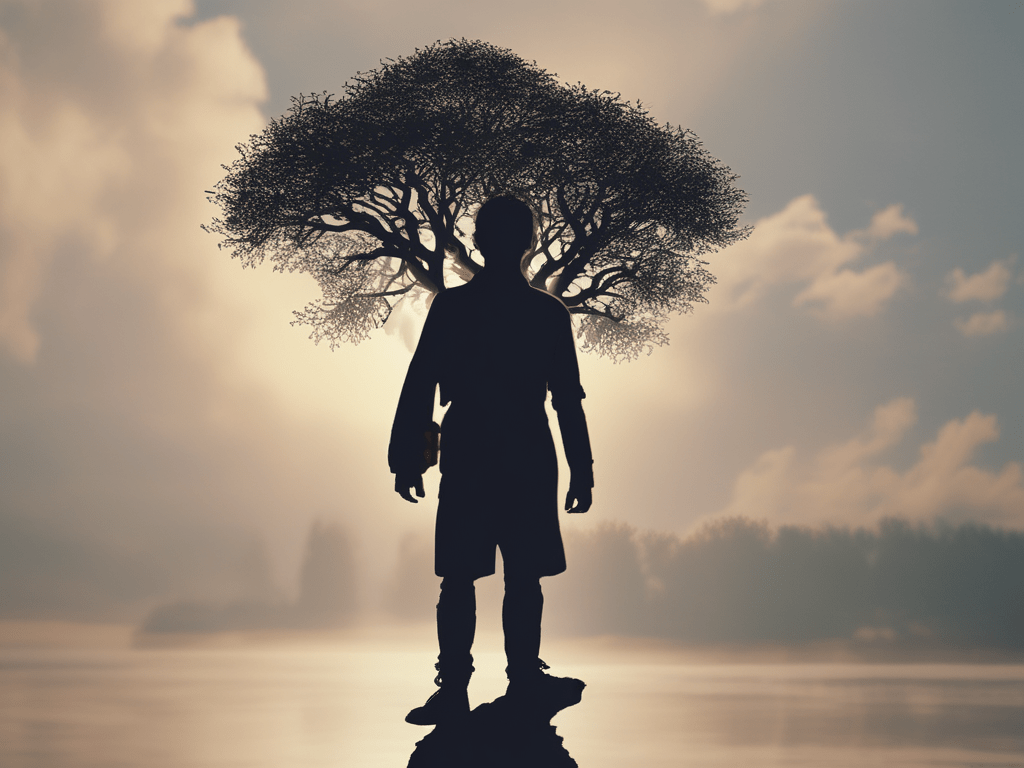
We carry our ancestors within us. Not only in our faces, the colour of our eyes or the shape of our hands. Also in our beliefs, fears, reactions, and even in our dreams.
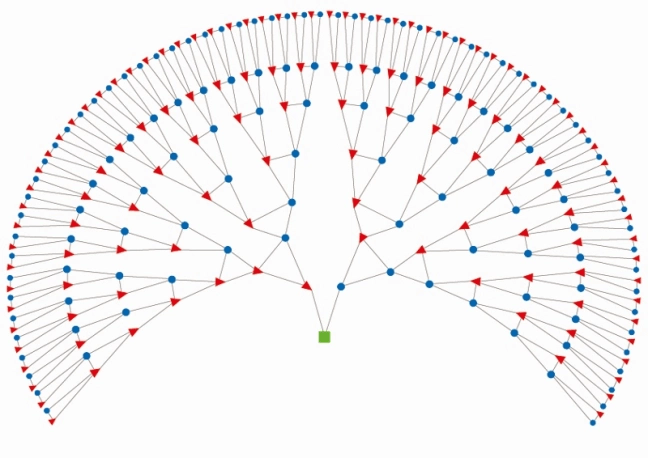
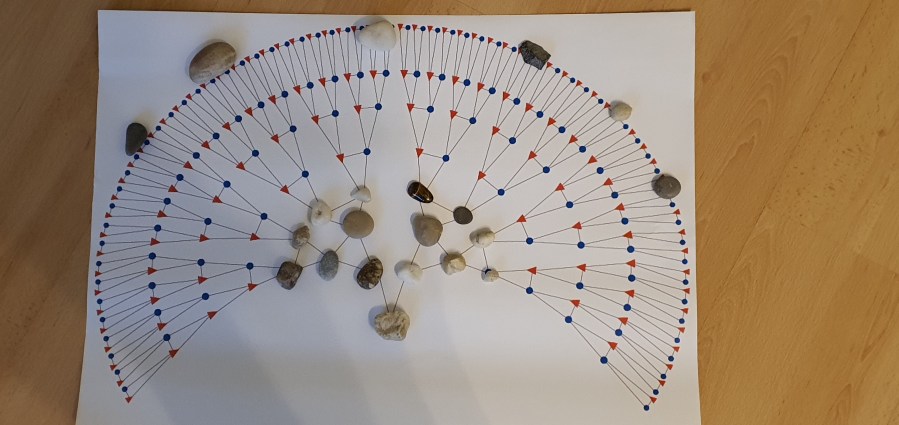
Through our parents, we inherit the patterns of our entire bloodline; an invisible stream stretching back through generations – all the way to the first humans.
Imagine the thousands of lives that preceded ours. So many experiences, choices, loves and losses…
Some of those ancestors are at peace. Others are still processing. And that can affect us – their descendants – without us even knowing it.
What we often refer to as ‘unexplained patterns’ may have origins far beyond our own lives. When we (unconsciously) carry someone else’s pain, it can weaken us. However, when we connect to the healed strength of our ancestors, a profound source of support and clarity emerges.
Ancestral work is not only a tribute to those who came before. It is also a way to fully arrive in your own life.
Saturday, May 24th and Sunday, May 25th, 2025 10 am to 4:30pm Sol Healing Center, Austin, Texas Seminar fee: $300 (includes the two-day seminar, digital syllabus, lunch and refreshments)
Join us for a remarkable weekend seminar fusing the practice of Systemic Family Constellations with the grounding power of Shamanic Ritual, engaging the resources of our divine and blood ancestors.
Led by dynamic shamanic practitioner and experienced family constellations trainer Susanne Hazen of Amsterdam, we will engage Systemic Ritual to discover and release family conflicts that have been passed down generationally, holding us from full realization and peace.
Bringing our present day issues into focus, we will create systemic rituals to engage our generational lineage who are ready and willing to provide resources, strength, and support.
This seminar is for those experienced in family constellations or shamanic work, as well as those with a genuine desire to access ancestral wisdom and resources.
The Power of blending Constellations and Shamanic Ritual
Systemic Ritual is an evolutionary method developed by Daan van Kampenhout, born from his considerable study of Family Constellations and Shamanic ritual practices. Daan realized that melding the powers of family constellations and Systemic Ritual can effectively address personal challenges by ultizing the power of the collective field.
Traditional Family Constellation methods focus on pinpointing the origin of individual or family problems, Systemic Ritual embraces the entire abstract essence of a family’s story. This approach allows for the transformation of long-held issues into collective archetypal themes, making each ritual meaningful and relevant to all participants.
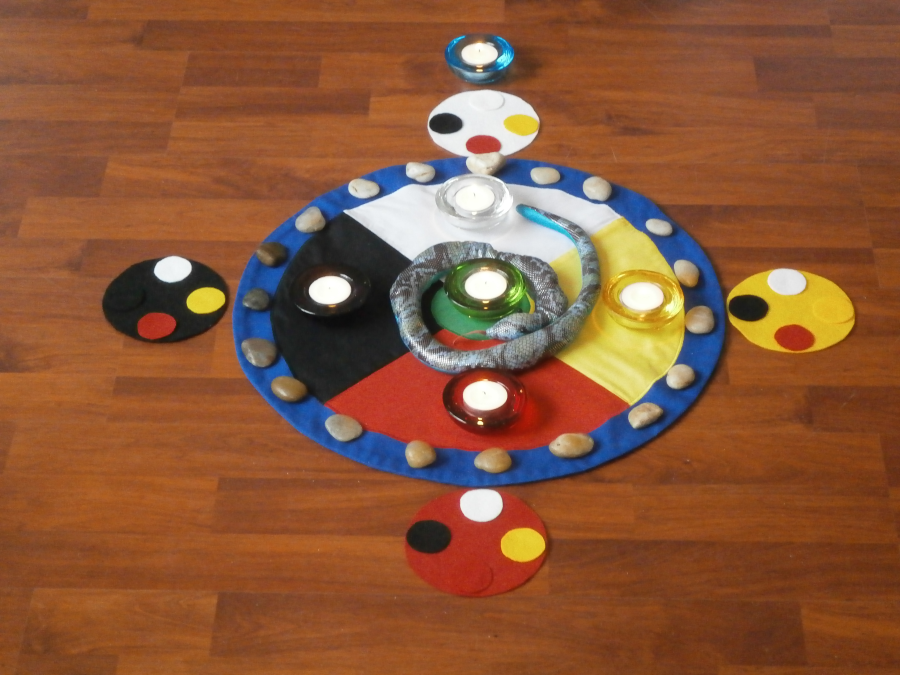
Under Susanne’s guidance, we will access the ancestor field through Systemic Ritual in relation to family issues, including entanglements, conflicts, and destructive patterns. Drawing on the rich tradition of Shamanic practice, honoring the cardinal directions, and incorporating the rhythmic sound of the drum, prayers, and structured patterns, each ritual can be a meaningful, relevant, powerful tool for healing and unity in our everyday lives.
Susanne’s approach is spiritual, yet down to earth. With her passion for travelling and immersing herself in different cultures, combined with all the knowledge she has gained, she is a teacher with her own style and is open-hearted to all that is.
Host: Candyce L Rusk, Austin Constellations Circle
Candyce L Rusk, Family Systemic Constellation Facilitator, intuitive, energy practitioner and playwright, is very pleased to welcome Susanne Hazen and her powerful therapeutic and fascinating work to Austin.
Candyce discovered Susanne’s on-line, overseas Systemic Ritual coursework in 2022. Impressed with her skillful blending of family constellations and distinctive shamanic ritual, Candyce realized the inherent power, clarity and resources the combination brings to traditional Constellations.
Every choice we make must be made with the next seven generations in mind. Wisdom of American Indians.
In a narrow sense, our ancestors are our relatives with whom we have a blood relationship. In a broader sense, it also means joint relatives from earlier times, from which we descend collectively – as humanity, nation, community, and population group. This blog is about the first definition – the family.
OUR history begins before we are born. We represent the hereditary influences of our race, and our ancestors virtually live in us. James Nasmyth
Deep connection with our ancestors
The field of our ancestors has a lot of effect on us. The family’s energy field – the blood bond – is strong enough to influence descendants for generations. In this field are the relatives who have produced children and those who died young or remained childless.
The family is a system, and everyone within that system is connected, whether we are aware of it or not. Every person in a family is connected to all other relatives, even if they are long dead or concealed. One also remains connected with family members who have been excluded or rejected.
I was born by myself but carry the spirit and blood of my father, mother and my ancestors. So I am really never alone. My identity is through that line. Ziggy Marley
Empower or disprove
This connection with our ancestors can strengthen and weaken us – depending on who you are attuned to. When you are attuned to ancestors who are in good shape, it gives you inner strength. However, being attuned to ancestors who are still suffering can weaken you—especially when you unconsciously want to take away their pain, cry their tears, and take on their burden. That is not possible. You are only strong enough to carry your own burden. You can’t wear other people’s burdens. This entanglement can be resolved through a Family Constellation or Systemic Ritual. Both in a family constellation and in a Systemic Ritual, the suffering of one or more ancestors is made visible, and the aim is to alleviate and, if possible, heal this suffering.
We are a continuum. Just as we reach back to our ancestors for our fundamental values, so we, as guardians of that legacy, must reach ahead to our children and their children. And we do so with a sense of sacredness in that reaching. Paul Tsongas
Suffering of ancestors
Life has its joys but also its traumas. Traumas can continue for a long time – even in descendants generations later. These are major traumas – miscarriages, abortions, divorces, children who died, mothers or fathers who died early and left behind young children, alienations, loss of home, having to flee, forced migrations, victims and perpetrators of all forms from abuse of power (from rape to slavery), war traumas ………. Ancestors who have experienced these kinds of things have to deal with it even after death. Even after death, they still need healing. Therefore, in many cultures, there is still the idea that ancestors need prayers and rituals to bring healing, after which they can join those who have already found peace. In a healed state, they can have a supportive effect on the descendants.
Tuning in to strength-giving ancestors
Fortunately, it is not only traumatic experiences stored in the field of our ancestors that can affect us. Many good experiences are also stored in that field. We can connect with that to experience wholeness and strength. When the line to ancestral power is open, life takes on direction and meaning, and we can handle difficulties – which are therefore experienced as a challenge rather than a problem. Strength-giving ancestors are usually ancestors that are at least two or three generations away from us. They have already healed the wounds of their lives and can transfer the life force. You can tune in to these ancestors. This idea comes from shamanism. The concept of strength is central to shamanism. When someone does not feel well, a search for power sources is needed within the shamanistic viewpoint. People can connect with those power sources to strengthen themselves. With that power, they can then take the next step in solving their problem to feel better again.
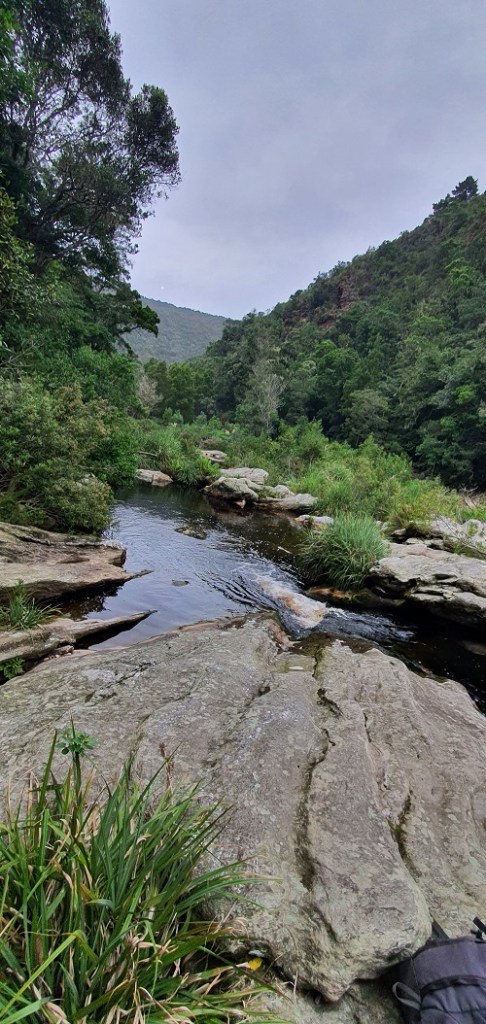
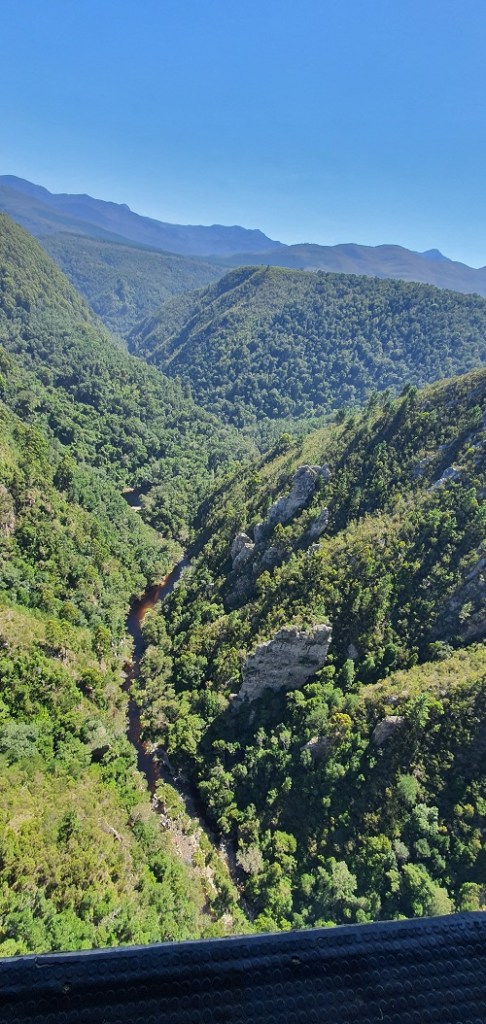
As you have read in my previous blogs, I was in South Africa for the last few weeks. I spent time in Towerland (Langeberg mountains) and Wilderness, among other places.
This is one of the areas of the San – the oldest people in the world. They are descendants of the oldest people on earth. Recent genetic studies show that San genes date back to the oldest human genetic material in the world. And since Homo Sapiens – as far as we know now – migrated from southern and eastern Africa to other parts of the world – it could be that my and your distant, distant, distant ancestors walked here.
And I was allowed to walk on that ground. I experienced this as very special and healing. And it made me realize once again how humble we are.
Meet our distant ancestors.
Another online circle, Systemic Ritual, will be on Monday, March 11, 2024. This time, we are going to meet our distant ancestors. Are you joining us? See:
Let me take you back to the centuries that preceded us.
The last word on the evolution of Homo Sapiens has not yet been said. But we know almost certainly that many hominins from different species preceded us and lived side by side for millions of years. And the origin of these hominids was, as far as we now know, in the south and east of Africa. The oldest known hominid, Homo habilis, evolved about 2.8 million ago. H. habilis was the first known human species to use stone tools. The stone tools found in caves in South Africa may belong to Homo Habilis. And I got to touch it!!! About 1.8 million years ago, Homo erectus, the ‘upright walking man’, appeared. H. Erecus spread through Africa and Eurasia. He lived on this earth for more than one and a half million years. (What do you think – shall we – the homo sapiens – come so far, or do we destroy ourselves soon enough?) During those years, various ‘variants’ of Homo Erectus emerged. Homo ergaster is one of them. This one stayed in Africa. Homo Sapiens (us) evolved from this species about 200,000 years ago. And the home Sapiens has spread all over the world.
The San – descendants of the oldest people on earth
Back then, long, long ago, there was a woman named =Um-=um-Borose. She was our mother and she came from the sun. Umum Borose, after her death, gives birth to children of the sun, the San people. From: https://rozenbergquarterly.com/de-historie-van-de-san/
The San is a name for different population groups in South Africa, Namibia, Botswana, and Angola. They belong to the Khoisan. They simply call themselves ‘people’ or ‘real people’ in their own language. The Dutch colonists called them ‘Bushman’. This name refers to the bushes among which they lived. The Dutch were not that friendly to them, by the way. In the early nineteenth century, most San were exterminated or expelled. As a result, due to a lack of examples, their knowledge of the petroglyphs and understanding of the medicinal properties of the vegetation disappeared.
The ancestors of the San were once the only people to inhabit the plains and mountains of southern Africa. They made petroglyphs that we can still find today. These petroglyphs are the first human art expressions.
They were nomadic tribes. They lived from hunting and from ‘veldkos’, an African word for everything that can be found and edible in and on the ‘field’. These are fruits, tubers, roots, nuts, seeds, honey, and ostrich eggs. The San did not live anywhere permanently. There were areas and places where they kept coming back, including safe places in caves or fields with a few simple grass huts and a fire. As hunters, they had to follow the migration of wild animals in the dry season.
San culture was based on a high degree of equality. They were not fighters but lived according to the principle of giving and sharing. This principle allowed them to survive despite often harsh conditions.
When I draw my bow, I feel happy. It reminds me of the old days. We hunted and had a good life. Then, the white man came and took away our hunting grounds. He called us things from nothing. What kind of life is that? – Old Jacob Grandma. From: https://rozenbergquarterly.com/de-historie-van-de-san/
Fynbos
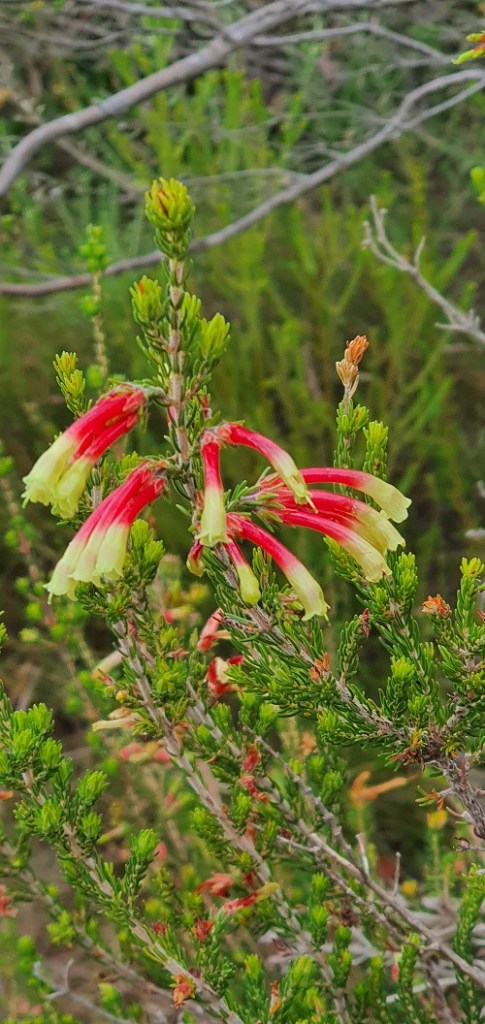
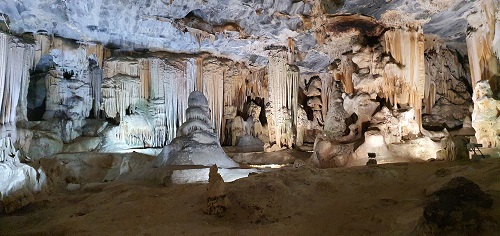
Fynbos is the vegetation that you only find in the Cape region of South Africa. The Dutch colonists gave the name fynbos. The name refers to the thin trunks of the shrubs, which are unsuitable for construction wood. The Cape Floral Kingdom is one of six flora kingdoms on earth. Although it is the smallest, it is the flora kingdom with the most diverse vegetation types. The fynbos is – unfortunately – very ruined. Agriculture, wine growing and exotic plant species have largely displaced this original vegetation. Numerous fynbos plants are already extinct, and more than a thousand species are threatened with extinction. Reserves are now designated to preserve and restore parts of the vegetation. Many types of fynbos were used in traditional medicine by the Khoi San. Nowadays, this traditional knowledge is being researched. Unfortunately, a lot of expertise has been lost. I did a tour with Branden in Wilderness. He is still starting up his company, but you can find him here: Branden Wilderness I was impressed by his knowledge of ecology and the passion with which he is restoring the native vegetation on his property, in particular by removing non-native vegetation. I also learned a lot about natural medicines. It is a must-see and must-experience for anyone with a heart to take care of our planet and its ecosystem. And last but not least, visiting the cave where our ancestors lived for thousands of years was awe-inspiring.
As you can read in my previous blog, last week I was in Towerland for the training week: I Am of This Place: Deepening Our Sacred Relationship with Life and with Land with Tanja Meyburgh and Sue Davidoff. This week, we focused on exploring our sense of ‘belonging’. We did this by connecting to the Land through our senses, rituals, movement and Land constellations. In the previous blog, you could also read that I often experience difficulty fitting in. So, this week was very educational for me personally. And, of course, I have gained a lot of inspiration for my work as a facilitator in Systemic Ritual and Systemic Constellations.
However, the personal steps I took and the insights I gained were really important to me. In response to my previous post, someone wrote: “… Not fitting in is also a theme of mine, as well as being excluded and different. I always felt like a world citizen and didn’t want a connection with any nationality. ….. “.
This is also very recognizable to me, being a world citizen and not wanting to tie myself to one nationality or another. Perhaps that is why I have developed such a unique accent – not traceable to any country. The disadvantage of this is that everyone asks you, no matter where you are, “Where are you from?” Actually, with this question alone – no matter how “normal” that question is – people tell you “You are NOT from here.” Add to that the fact that I am indeed somewhat ‘alien’ in some respects, and the feeling of ‘not belonging’ is complete.
What would be a better question?
However, whatever the case is, I can feel at home – with my entire being – wherever I am. The true sense of ‘being in my place’ is within myself, and in that respect, I am indeed a citizen of the world. In the future, I will make more conscious contact with Land. As soon as I arrive, I will greet the Land and thank it for allowing me to be there. I take in everything that grows on the Land and inhabits the Land and greet, ‘Hello, here I am, Susanne Hazen. Thank you for allowing me here.’ This also means that I will approach the Land and everything there at that moment with respect and love and adapt; as flexible as Water. I will consciously inhale the Air and share something of myself with my exhalation. And with my passion – the Fire within me – I will give the country my love. I need to learn to trust that I can do that and that it will be enough. Unfortunately, I grew up in an atmosphere where I was made to feel like I never gave enough. With my sensitivity to sense the atmosphere and inability to keep up appearances, I have often been accused of being ‘someone who breaks the game’.
The land constellations that we did showed how humans still do not know how to relate to the Land. There is still a long way to go in that regard. I think we need to go back to how the original man, the man from the hunter and gatherer era, looked at Land. Namely that Land is for everyone and that it is essentially incorrect to appropriate Land (or Water or Air). Something that man has started doing since he started cultivating the Land. This has usually been at the expense of others (people, vegetation and animals) and is, in my opinion, incorrectly called civilizing.
In addition, we often ignore areas of Land where ancestors are buried or areas of Land that are considered ‘sacred’ for whatever reason. This is overlooked too often. Men, literally, rolled over it. This asks for conflicts. There are too many examples of this in this world right now.
How do we find our way back to a healthy relationship with Land?
I am of this place. To be continued.
P.s. I always enjoy it when you write a comment. Feel free to do that. You won’t see your comment immediately because I have to approve it first. But then it’s there.
As you have already read in my previous blog, I travelled to South Africa for new inspiration. I will participate in the training week: I Am of This Place: Deepening Our Sacred Relationship with Life and with Land with Tanja Meyburgh and Sue Davidoff. On Monday, this week will start. It is a week in which we will explore our sense of ‘belonging’ and nourish ourselves by connecting with the land through our senses, rituals, movement and land constellations.
Prior to this week, I first made a short tour through this beautiful country. The influence of the Dutch, who colonized the country here from the mid-17th century to the 19th century, is indelible and the impact of this period is still present. While driving through the southern part, you will mainly encounter Dutch place names and street names. Afrikaans (almost Dutch) is officially the third language of the country – next to English and the traditional languages of the original inhabitants. The wine farms, coveted by tourists and offering wine-tasting opportunities, hide a traumatic past for the original inhabitants. The indigenous Khoisan population was expelled by the Dutch and has been without a homeland since. Apologies have now been made – at the end of 2022 – for the slavery past by the Dutch government and in July 2023 by the king himself. However, I still notice little awareness of this past in Dutch society. And South Africa was hardly mentioned in the speeches surrounding the apology. An apology is a first step, but then the real work should start, but I don’t see much of that yet. In my opinion, the protests by the Khoisan in October 2023, during the visit of the Dutch king and queen, were therefore entirely justified.
This history of the Netherlands always gives me a bad feeling. Whenever I am confronted with this history, I prefer to escape into ‘NOT belonging’. I have a fantastic excuse – born and raised in Limburg – a province that was not yet part of the Netherlands in the centuries in question. However, I have lived and worked in the ‘real’ Netherlands for over 40 years, but I still have the feeling of ‘just not belonging’. I don’t even know if it’s ‘not wanting to fit in’ or just ‘feeling left out’.
Who knows what the next week will bring me. On to: I Am of This Place.
First, I wish you already a very happy New Year with lots of health, well-being and great challenges.
A look back at 2023
I look back on a pleasant, adventurous and full year of 2023, where I could fully practice my passion – systemic and shamanistic work. There were no fewer than ten groups for the Systemic Ritual course (online and live); I could give modules in Family Constellations for students at Innerlife Educations. I experienced enormous growth in the one-on-one consultations in my practice, and the advanced group grew!
So, I gained a lot of new inspiration in 2023, and YOU will notice that in 2024! Because, of course, I will integrate all these new insights and methods into my work.
What drives my work? My top 5!
“Curiosity about people and life as a whole.” “The inner movement from problem to strength.” “Interest in the inner processes that people go through.” “Research into ancient healing methods and their synthesis with contemporary methods.” “Love for life and for everything that lives.”
By popular request, there will again be ‘separate’ online circles in Systemic Ritual. Join me and inspire me with your questions or themes you would like to bring up. The first workshop of the year will be around: Bye bye 2023, hello 2024.
Based on the experiences gained with the modules of the Systemic Ritual course, I have improved the design of this course! More time to undergo rituals under my guidance and more time to practice together! See: /working-with-systemic-ritual/
Not planned yet, but definitely coming – a series of ‘Meetings with your ancestors‘ – based on all the new inspiration I have gained. This will be a series of consecutive workshops with beautiful(new)rituals, movement, and music.
In addition, the advanced group continues as usual, AND more opportunities have been created to participate – especially for people who live a little further away from Amsterdam or prefer the day instead of the evening. See: /systemic-ritual-en-sjamanisme-gevorderde-groep/
In the article ‘Soul loss and soul retrieval’, I wrote about soul parts that have separated from our body and personality at some point in our life. Such a secretion leaves a void, a reduced vitality. Systemic Ritual is one of the methods to get back in touch with those parts and let them come back – if desired.
And what happens after a ritual in which soul parts are retrieved?
After a soul retrieval, you often hear people say that they feel ‘more present’, ‘lighter’, ‘more alert’, ‘less dreamy’ and ‘stronger’.
If you want to learn more about Systemic Ritual and working with the concept of the Soul: See:
Often people also report that they perceive colours more clearly, hear better, and smell better. In short, the connection with the physical body has been improved. This can cause slight disorientation for a few days. The ‘healing’ has yet to settle down and find a place.
You often also hear these ‘side effects’ after a family constellation. Breaking free from an entanglement with a parent or ancestor, with which the method of family constellations works, is somewhere also a form of ‘retrieving a part of the soul’. A soul part, held by an entanglement, could not be fully present in the here and now because it was too closely connected with the trauma of that (ancestor) parent. In that context, this part was on the other side. When the entanglement is broken, that soul part can retake its place in the here and now, in the body/personality of the client.
Be careful
People are often more emotional after a soul retrieval. With the retrieval of the lost soul part, sooner or later, the memory of the event that made the soul part ‘flee’ may also return. That is why you must also be careful with retrieving soul parts after major trauma. The soul part that has thus gone ‘to the other side’ cannot simply be ‘placed back’. There will first have to be some form of healing of this soul part before returning to the client. The soul part may even have to be taken to a ‘healing place’, a kind of spiritual hospital to receive care and healing there before returning.
In addition, the client must also be strong enough to ‘handle’ and ‘care for’ the soul part that is being retrieved. A client must therefore have sufficient strength to receive the soul part again. It must be safe enough for the soul part to return.
Welcoming little Susanne
After retrieving a soul part, feelings of happiness, sadness, or anger can arise. These feelings could have to do with the lost soul part, and the process of remembering and integrating has to start. And that can take quite a while.
I came across the little two-year-old Susanne in a visualisation during one of my ‘retrievals’ (it is not strange to be allowed to undergo several ‘retrievals’). I saw images of her in a beautiful forest with sweet cats, horses, birds, lots of flowers, extensive lawns, streams with clear running water and even two gnomes – Bop and Mieke as the little Susanne called them. The little Susanne had “hidden” in this beautiful place. And no – she didn’t want to come back. Several times – spread over a few weeks – I had to visit her, become friends with her calmly and convince her that it was also very nice to come back to the here and now, in my body, in my personality. She eventually did.
Welcome home, little Susanne
Then for days, I felt a wave of enormous anger towards my mother and towards my oldest brother. I could skin them. I was sure it had to do with little Susanne and talked to her. I asked her what was going on. That’s when the memory came to me. I was two years old, and my brother (5 years old at the time) was playing with me, but it got out of hand. He put a pillow on my face and lay on top of it. I choked, I choked. Then, after a few moments, my little body managed to throw him off me with unprecedented force. An unparalleled power of a small body – it managed to survive. I saw my brother startled and he ran away.
I realised this, back then, was the moment a piece of my soul left. I felt panic and fear rise in me. And then anger – I was furious with my brother and my mother. My brother for what he had done and my mother for not taking good care of her children. Where was she?
I told little Susanne that she’d survived, that she’d been strong enough to throw brother off her. And that these kinds of things are not nice, but can happen and that you can not blame a little boy of 5 years.
These words turned out to be completely wrong. This was not what the little Susanne wanted to hear. This did absolutely no justice to her feelings. These words were disrespectful, lacking in empathy – completely bypassing her feelings of fear, panic, anger and sadness. These words made her return to her safe haven with Bob and Mieke in the woods.
Again I had to find her there. This time I stayed with her, feeling the fear again; we relived the panic, cried, and cursed on brother and mother. We managed to thank the unparalleled strength that appeared back then. We realised it wasn’t ‘I’ who managed to throw off my brother – it was my body’s survival instinct that managed to do that.
These emotions persisted for several weeks. My brother should be glad he didn’t call or meet me in these weeks. I would have given him the full blast of anger.
Integrate
After a ritual in which soul parts are retrieved, you are not done yet. A piece that has been separated from you for years needs time to integrate. That part needs all your attention, wants to be heard, seen and respected. That can be done in different ways.
As I described above, you can regularly start a conversation with the retrieved soul part. If you don’t have experience with this, find a therapist who can help you.
Pampering yourself is also a suitable method. The soul part has left because of a lack of joy, safety, etc. Show this soul part that there can now be joy, safety by undertaking things that underline this.
Bodywork – massage, emotional bodywork, shiatsu, acupuncture – methods that get the “chi” flowing again can be of great help too. Traumas are stored in your body. When a soul part is back, your body can also adapt, and physical blockages can finally be released with a little help from a therapist.
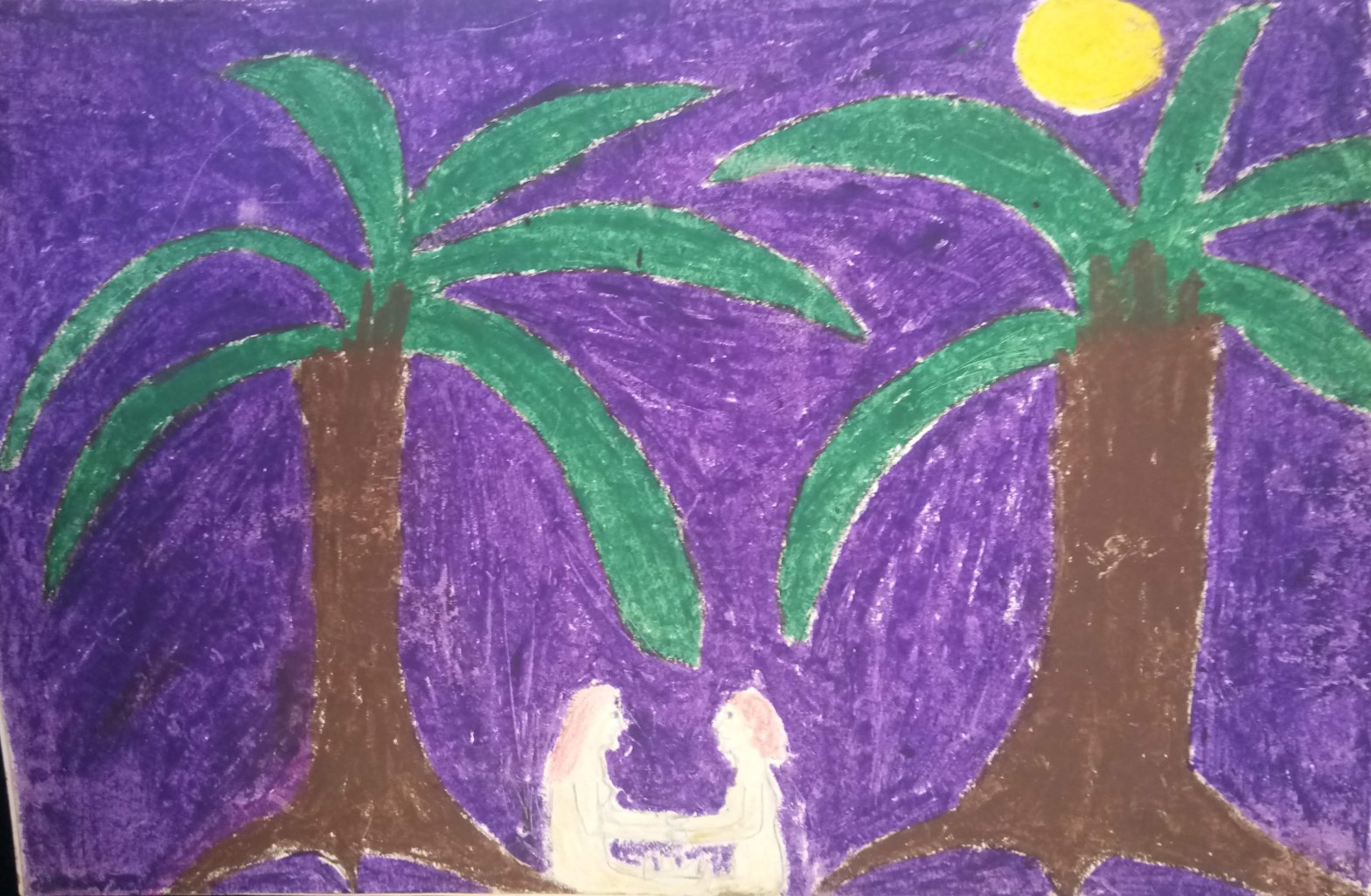
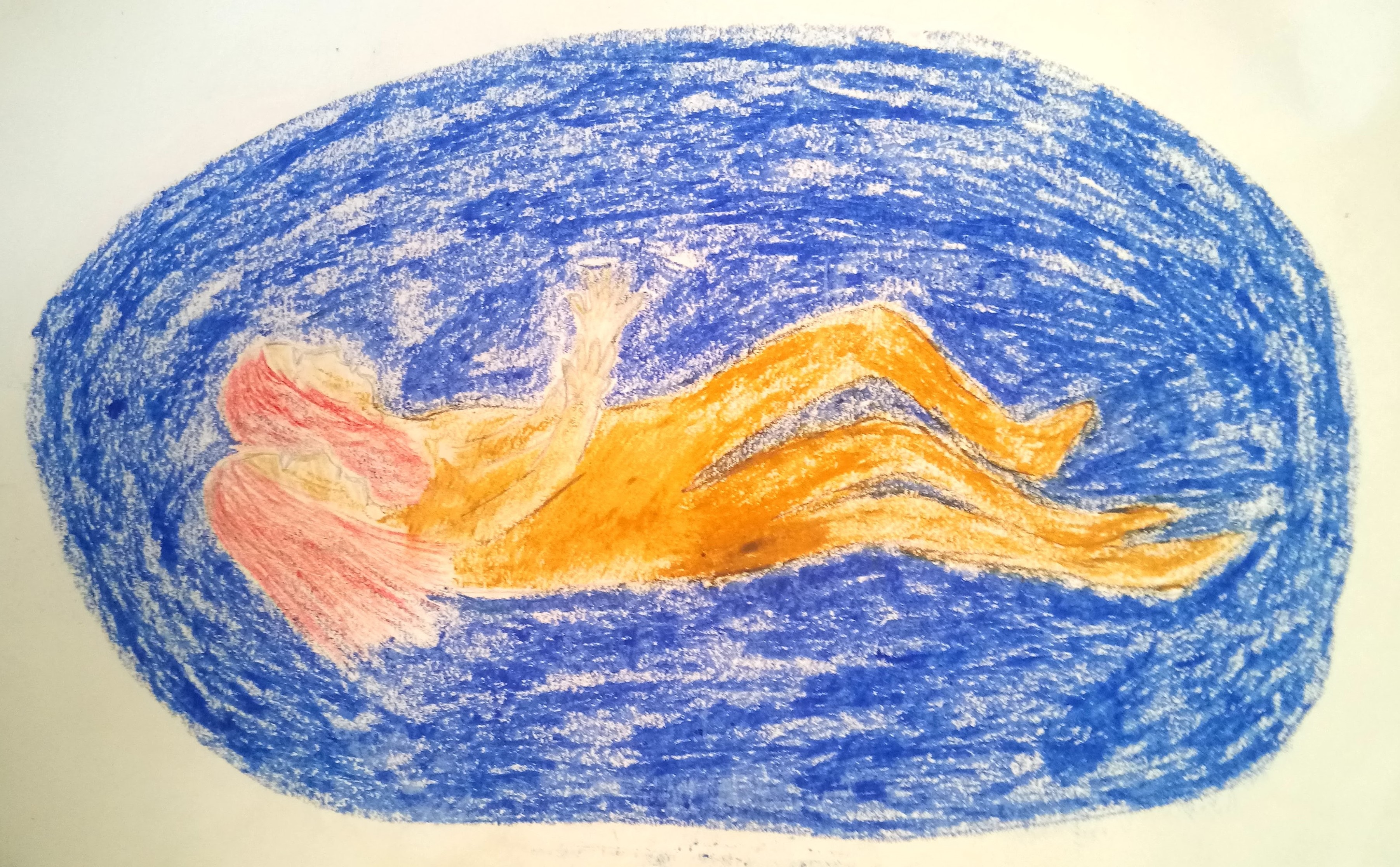
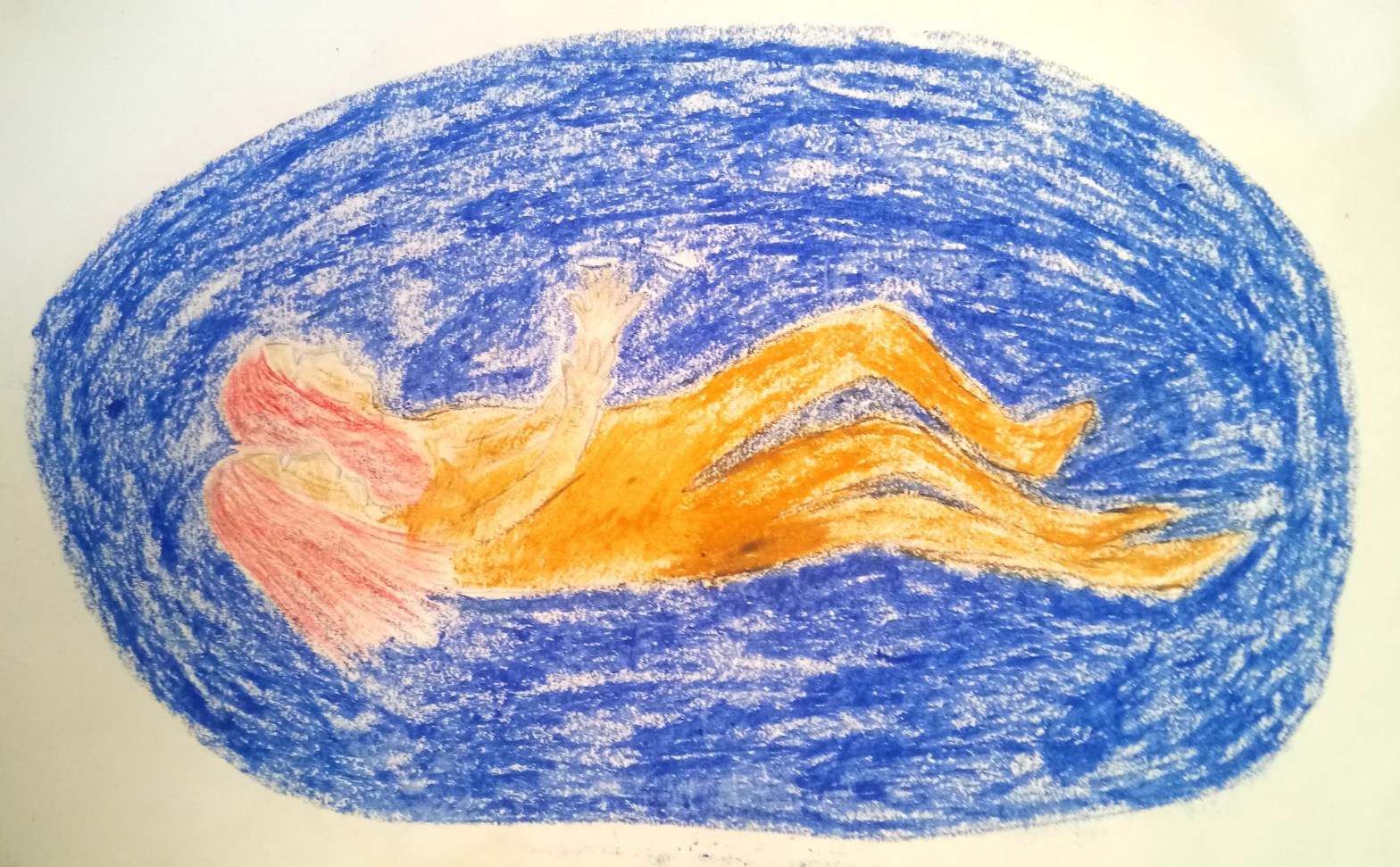
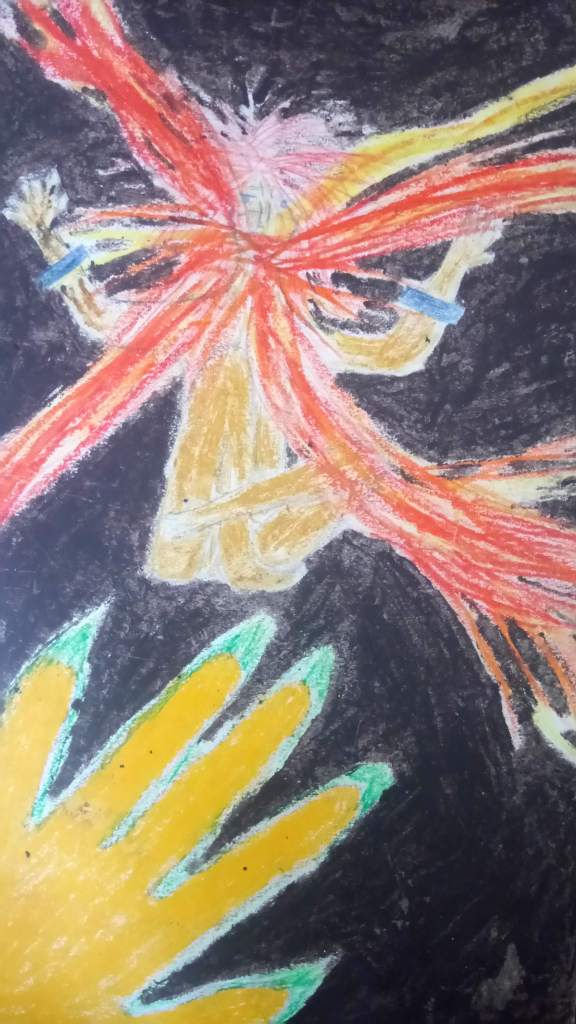
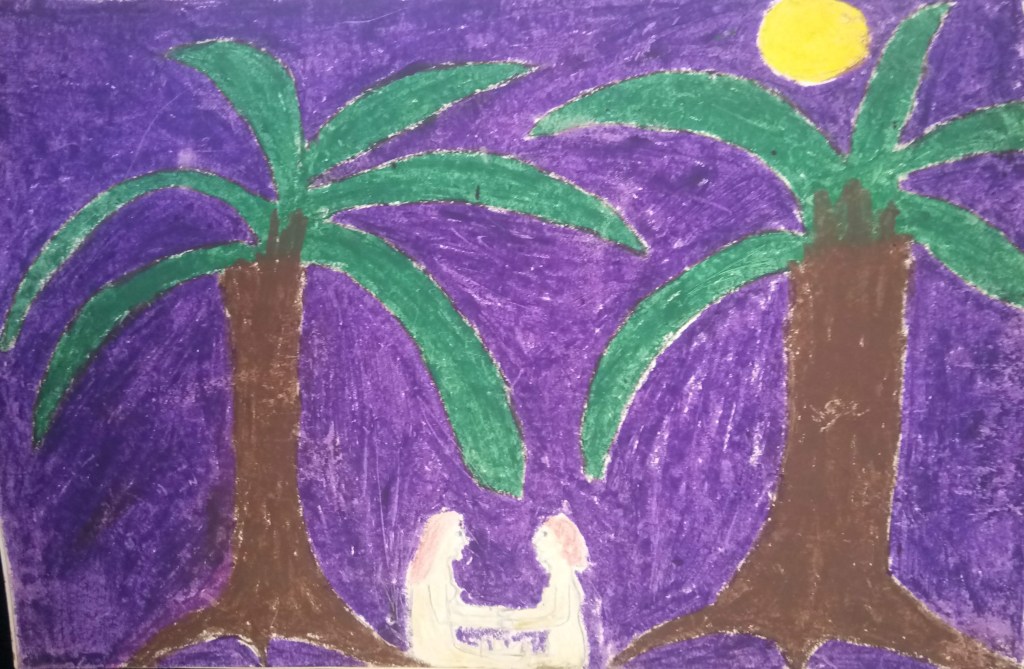
Drawing – the drawings in these articles are my own. After a return of a soul part, I created these – completely intuitive. One drawing shows what I felt. I felt as if a ‘body’ sank into me. The other drawings show how I took care of the soul part – by travelling with it regularly – in visualisations – to a safe, beautiful and warm place to have quality time together.
After severe trauma, the first thing to do is consult a psychotherapist or psychologist until there is enough strength to do a session in which soul parts are retrieved. After that, a therapist can again be helpful to integrate the retrieved soul part.
Inspired by:
Ingerman, S. Soul Retrieval. Mending the Fragmented Self.
In shamanistic traditions, it is stated that parts of the soul can separate from us and that this separation, this loss of soul parts, can be a cause of physical and mental illness. In this context, by soul, I mean an intangible part of our being that gives us vital energy and houses emotions, memories, feelings, sentiments. (This idea of the soul is similar to the concept of the astral body – as described in the article “The Five Bodies”)
If you want to learn more about Systemic Ritual and working with the concept of the Soul: See:
Lost parts of ourselves mean that we experience less energy/vitality because there is less ‘spirit’ in us due to the loss. A ‘full soul’ is fully present, clear, radiant. We unconsciously try to regain the lost parts through dreams, daydreams, quests for healing, spiritual disciplines, and by creating relationships with others that repeatedly mirror our lost soul parts. This search requires a lot of energy, while we already lack power because we have lost parts.
Parts of the soul can be lost due to various circumstances. These do not always have to be extreme circumstances.
Examples through which soul parts can ‘depart’ are:
You are too busy and lose sight of your soul
The soul gets bored because you “don’t live it.”
Souls can get jealous and then go to a ‘better place.’
Difficult situations “It’s not fun here anymore, so I’m going to a better place.”
Trauma, including abuse, loss of a loved one, miscarriage, abortion, surgery, accident
Sudden and extreme shock/fear
Parts of the soul can also be ‘stolen’ by someone else.
Symptoms or expressions of soul loss are:
Lack of vitality and connection with life
The feeling of being ‘absent’ after, for example, the death of a loved one, an accident or after an operation – the feeling of still being a bit in the anaesthesia
Feeling after a divorce that ‘a part of you is still with the other person.’
In shamanism, there are methods to bring the lost soul parts back to the person. This technique is called soul retrieval. Also, with the Systemic Ritual method, we can contact lost soul parts and help bring them back. After a soul retrieval, you will experience more connection with life, the earth, yourself and others.
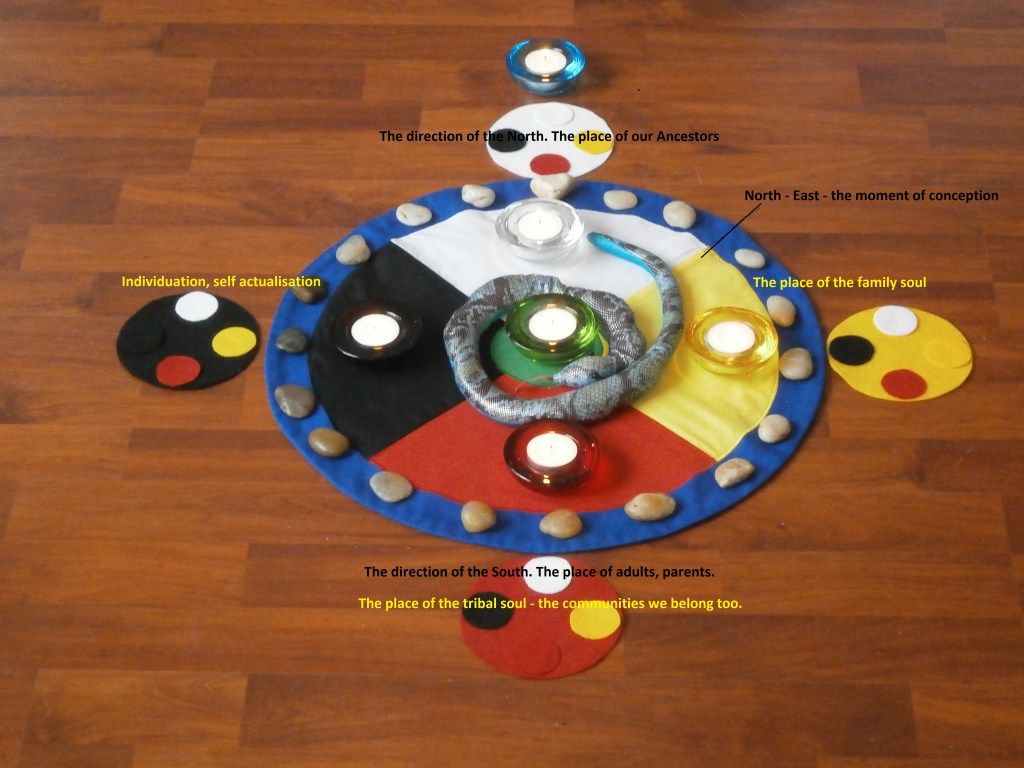
In the article “The Multiple Soul”, you have read that shamanistic traditions assume multiple souls. In my work, I distinguish the family soul, the tribal soul, the individual soul, and the universal soul. You can give the souls a place on the Wheel of the four directions, and the Wheel tells something about the development.
The Family soul
A baby cannot be born without a father and a mother. With this fact, the baby becomes a member of the family system. A baby comes from the spatial, formless, timeless and nonpolar direction of the North; actually a gift from the ancestors whose place is also in the direction of the North. The North-East point in the Wheel is the moment of conception.
If you want to learn more about Systemic Ritual and working with the concept of the Soul: See:
A baby comes from the spatial, formless, timeless and nonpolar direction of the North; actually a gift from the ancestors whose place is also in the direction of the North. The North-East point in the Wheel is the moment of conception. The child gets to know the polarities, rules, norms, values, and concepts about the world and life in the family. The child adapts to that because he needs protection and structure, just as a body needs bones. Adapting to the rules, norms, and values makes the child belong to the family and feel safe. In essence, the family soul narrows our space. This is necessary to be able to participate in the world later on. At some point in adolescence, the family system feels too limited. At that moment, the child starts to rebel against the parents, the so-called individualisation. It is a fake individualisation because the family is replaced by peer groups. Friends come, and the child starts to adapt to the accompanying subculture of these peer groups with their rules and limitations.
The tribal soul or collective soul
Joining a community is a necessary and logical step. Belonging to a group is needed to function in the world. It is a law of nature that you are more powerful as a group than as an individual. Therefore, when you join a group, you experience more safety and power. The group forms a unit by the grace of excluding others. As a result, polarities arise – we and them. To have a sense of being part of a group implies that there are outsiders. Sometimes it concerns minor differences, such as dress codes. There are ‘hard cores’ in the tribal soul. Groups that only look inward, cannot or do not want to enter into a relationship with other groups. Dialogue is not possible in that case. This hardcore does not allow individuation. The hardcore does not tolerate dissenting opinions or behaviour from its group members. We know this from religious communities, but the same thing happens within football clubs and other associations or between political ‘camps’.
The individual soul
In time the individual member, if the circumstances are well enough, develops and matures. At one point, he/she will experience that the tribal soul also becomes too oppressive. The group member starts to feel different in some aspects and wants to find his own values. This entails a whole process. We are programmed to survive, and that works better in a group. If the chances of survival (physical and mental) allow it, the individual can grow further. In humanistic psychology, this is called self-actualisation. In Jungian psychology, it is referred to as the process of individuation.
The universal soul
It is paradoxical, but while maturing in the individual soul, the realisation will come that you are a universal being; one with all there is. Ultimately, by observing your being, you arrive at the deepest core of your being. The identification with your body and personality disappears. That structure is released and transforms into a sense of unity with the whole. That is timeless, formless, unconditional, awareness of the equality of people, animals, plants. Here there is no more experience of polarity, no personal identification.