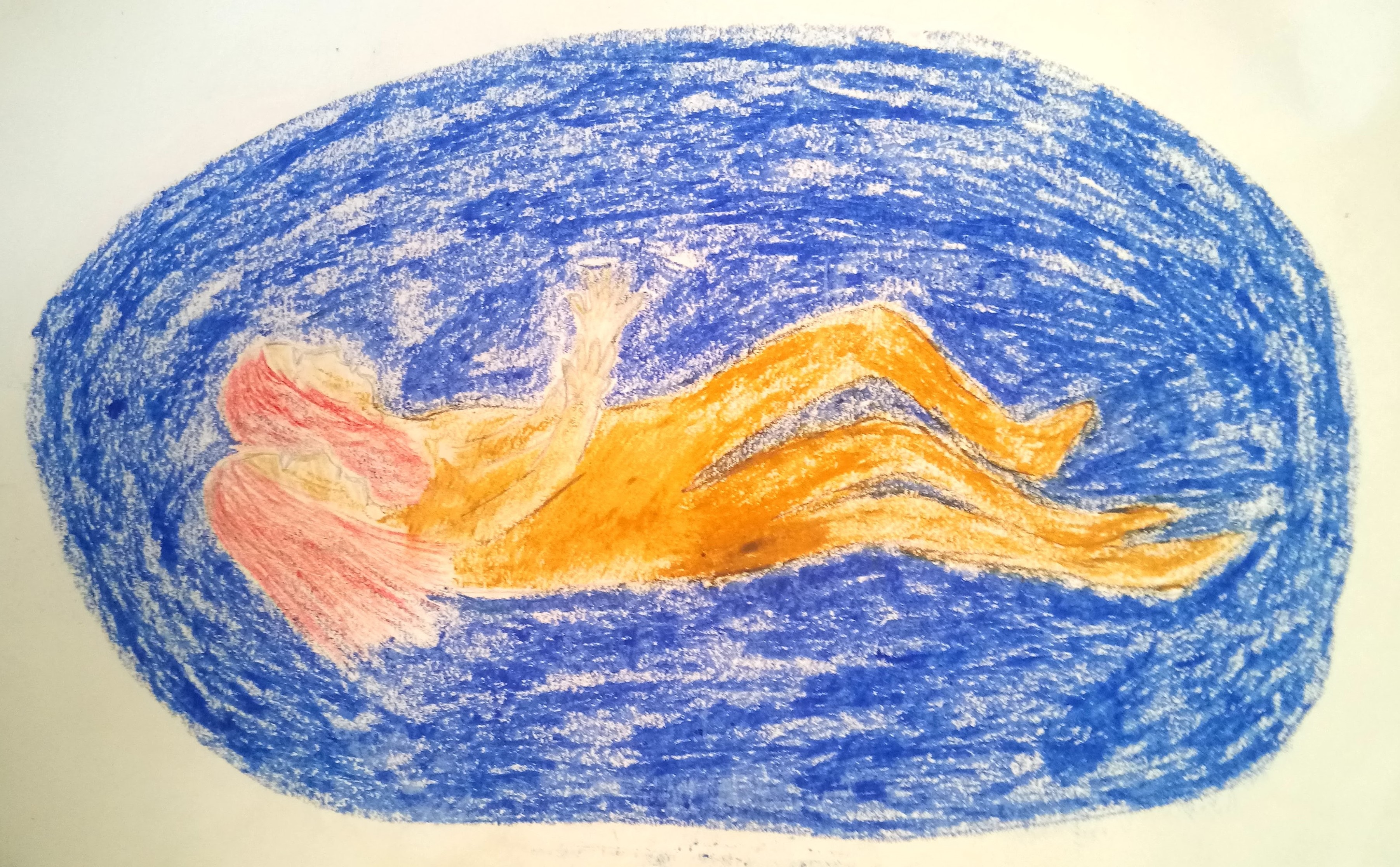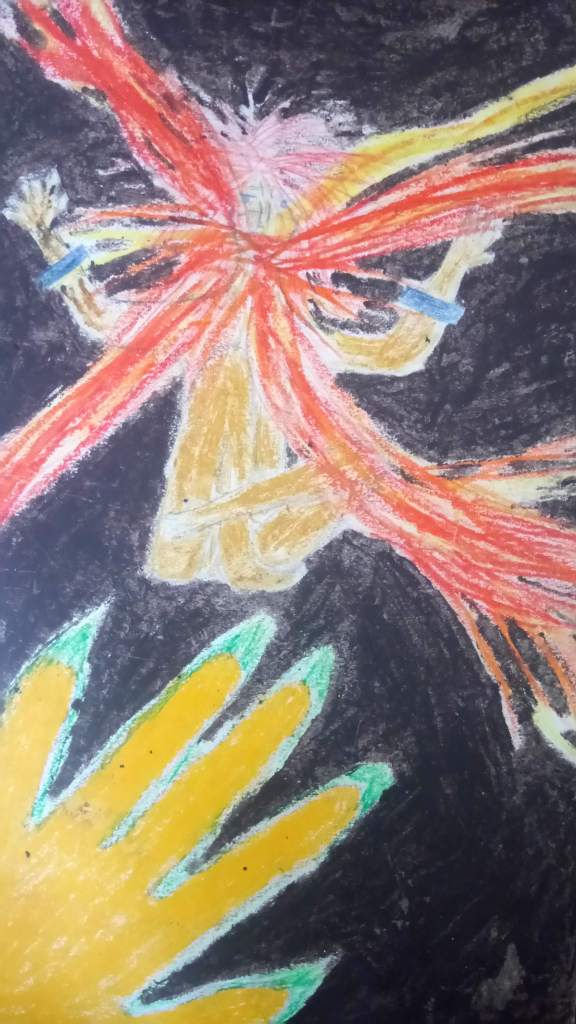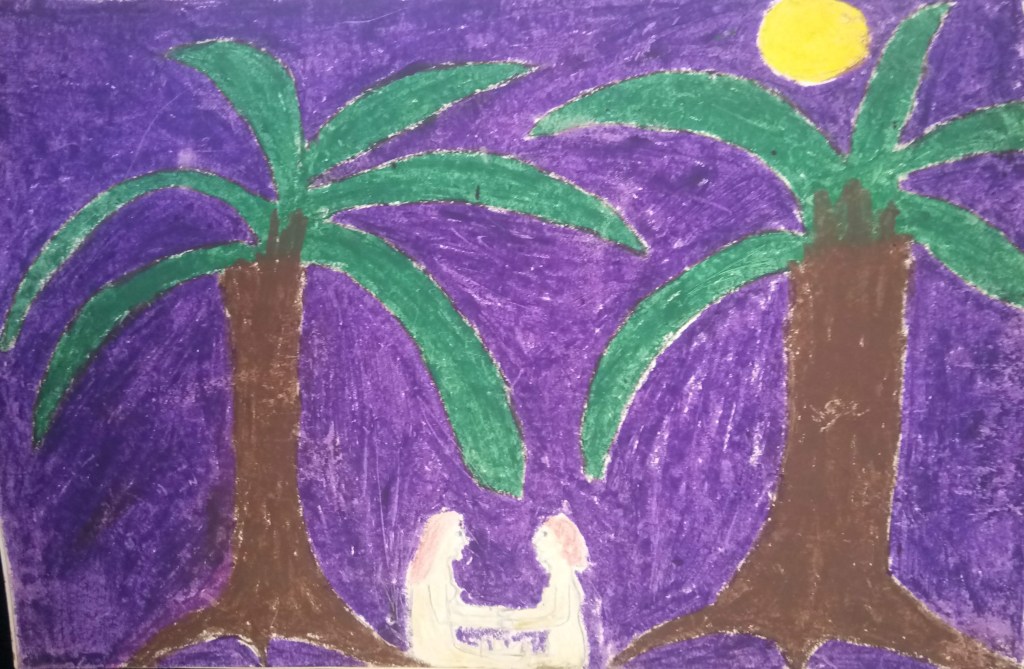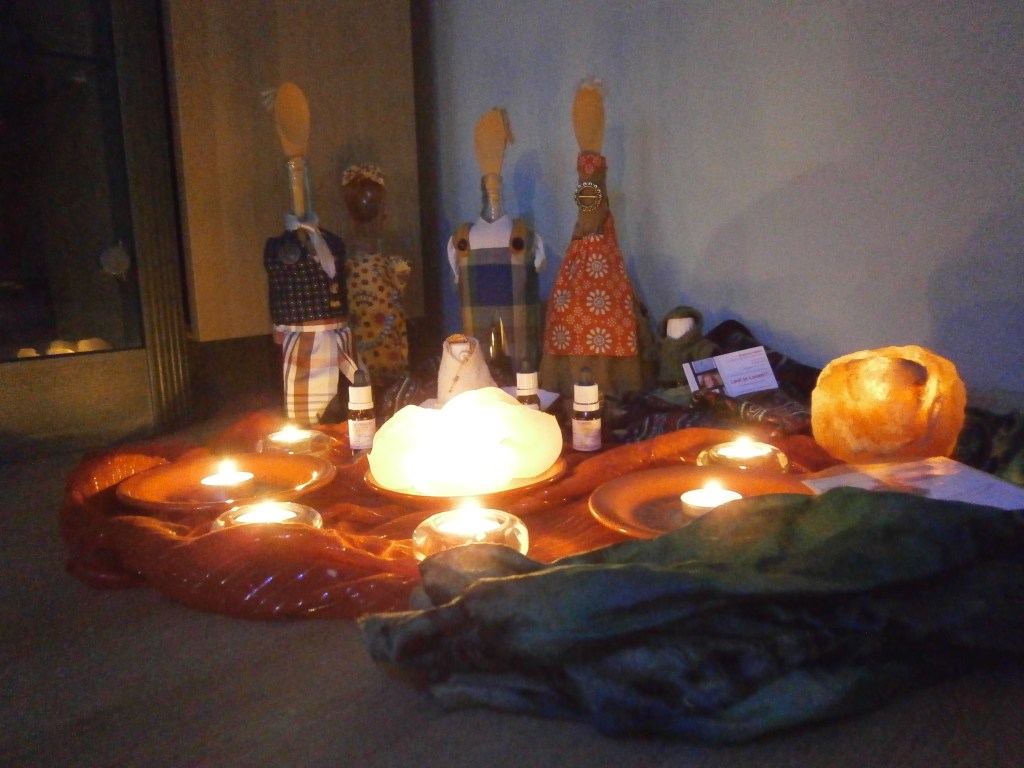
In the article ‘Five bodies or our being‘ you could read about the different bodies. In this article I describe a Systemic Ritual to support the mental body. You can perform this ritual alone or with others. In this ritual, the White Spider is used.
The mental body The mental body can best be described as a structure that makes thinking possible. So it’s not the thinking or your thoughts themselves. It consists of channels and structures that determine how dreams, thoughts and associations are processed. The actual expression of the thinking process is done by the personality, the ‘me’ or ‘I’. We find strong patterns in the mental body. Patterns consist of an automatic link between perceiving, recognising and feeling. The mental body has created paths that link past events, beliefs and emotions and lead to “automatic” responses. Some of these automatic ‘responses’ or conditionings may be unfavourable for you and deeply grooved. It takes practice to get rid of these destructive paths and put new ones in their place. So IT IS NOT A ONE TIME PRACTICE, BUT A PRACTICE YOU HAVE TO REPEAT AGAIN AND AGAIN.
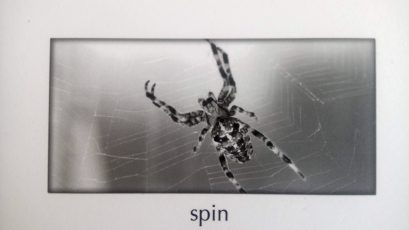
The White Spider The Spider can eat its own web. (That is a West aspect, cleansing) She reuses matter. Concerning the mental body, she can remove old structures and patterns. The Spider also can weave a new pattern or structure for you. (That is an East aspect). She is also called Grandmother Spider or Crystal Spider.
A ritual to ‘heal’ patterns in the mental body
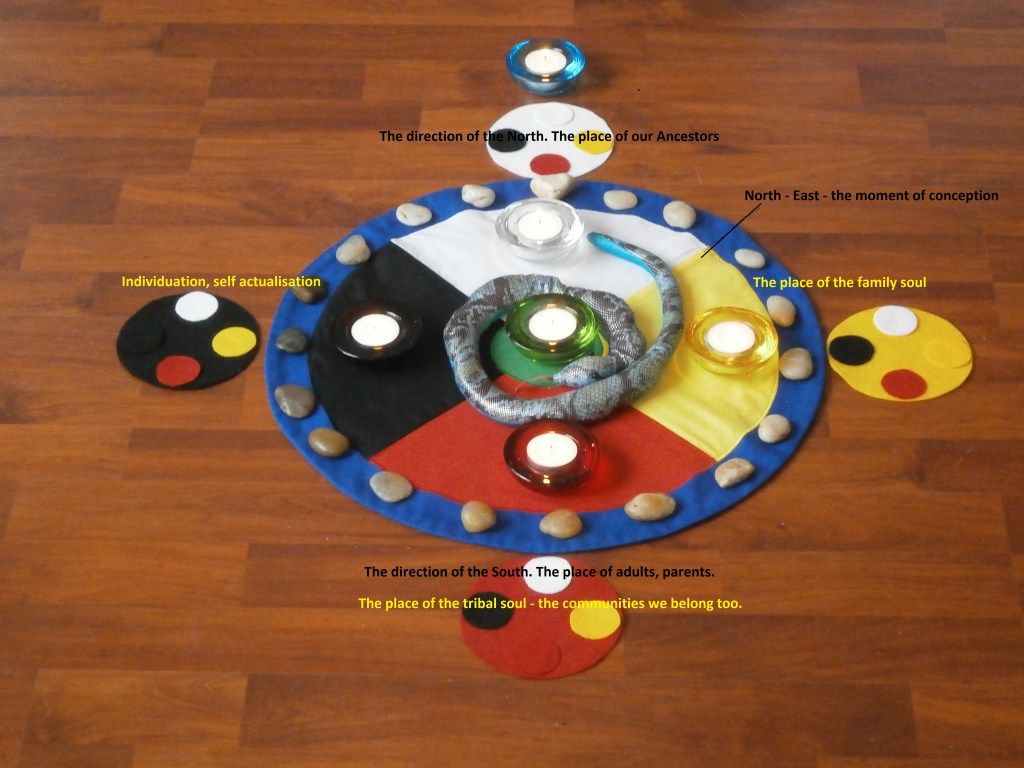
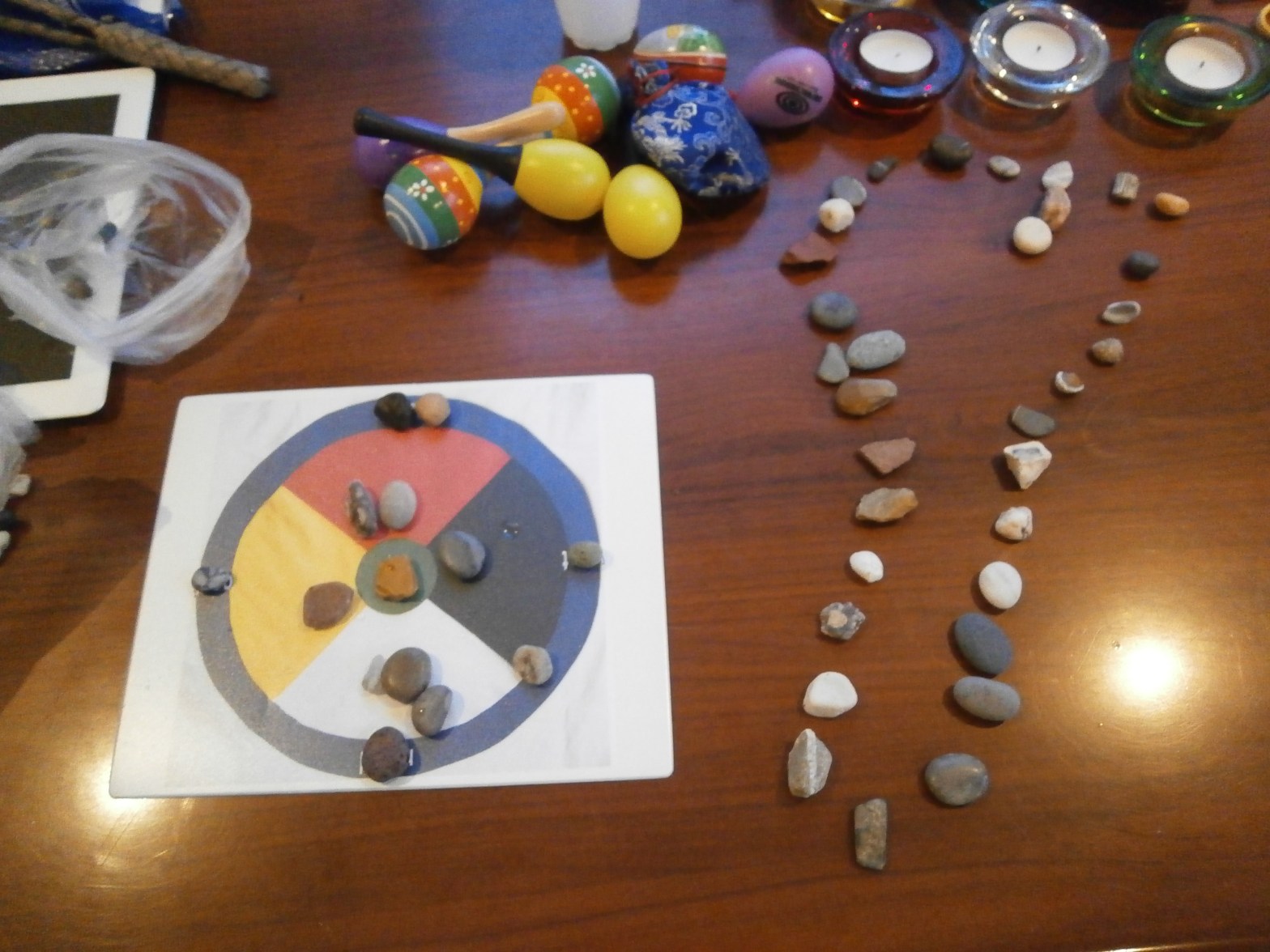
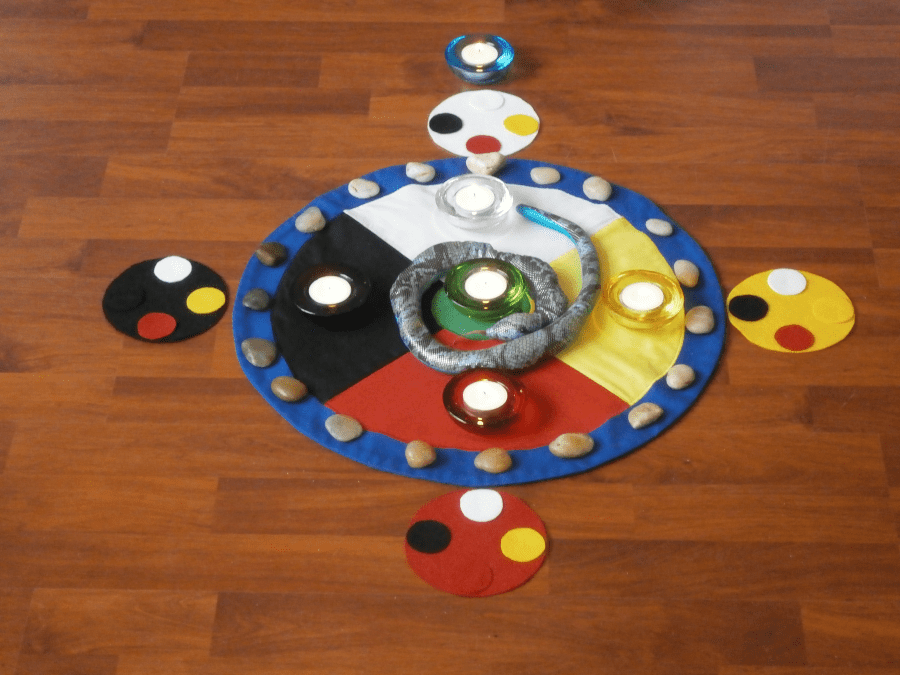
Take a seat in the centre of the wheel. You look to the South. In the West (to your right) invite (in your mind or a representative) the White Spider that eats unfavourable paths. To the East (to your left) invite (in your mind or a representative) the White Spider that creates new paths.
Ask the the Spider in the West:
“White Spider coming from the West. Certain patterns don’t serve me anymore. I ask you to help me get rid of these patterns.”
The White Spider in the West says:
“I am the White Spider who can break down, eat up, unfavourable pathways in your mental body. I help you to let go of what is no longer good for you at this moment of your life. I come from the West.”
Aks the Spider in the East:
“White Spider coming from the East. I want to replace old patterns that are not beneficial to me with new patterns that work better. Will you help me with this?”
The White Spider in the East says:
“I am the White Spider who creates new pathways in your mental body. I help you attract what is good for you at this moment in your life. I come from the East.”
And then you sit there for about 10 minutes – with a rattle or a drum or meditative music or just in stillness. In these 10 minutes, you keep the image of the two White Spiders active. You repeat the sentences regularly. Just let happen what wants to happen.
You can repeat this ritual for a few days as long as it feels good to you.
Besides practising Systemic Ritual and Systemic Constellations, I work at ZID Theater in Amsterdam as a project manager. I love theatre. People sometimes wonder how does this combination of Systemic Ritual and theatre work for me. I tell you, for me, there is no difference. As Systemic Ritual is related to Shamanic work, I want to explain how theatre is associated with Shamanism.
First: What is theatre? When I use the word theatre, I am not talking about a building nor the standard narrative dialogue style of plays. Instead, I use the word theatre for the branch of performing arts concerned with acting out stories in front of an audience, using a combination of speech, gesture, music, dance, sound, and spectacle – so, in essence, multidisciplinary.
Second: What is Shamanism? Shamanism is one of the most ancient human traditions. It exists already from the early beginnings of humanity. Shamanism evolved in hunting-and-gathering communities. An essential task of the Shaman was predicting and influencing the outcome of the hunt. Above that, his ceremonies were done not only for the sake of the community but also for the sake of the animals in the wood to be healthy and reproduce themselves.
It is said, Shamanism originated in the distant forests of Mongolia from where it spread. But I suggest it originated already before that time – at the very beginning of humankind in Southern Africa. Shamanistic practices still exist in our present time. The detailed methods vary from one culture to the next. However, they all have in common that a Shaman can heal the sick, communicate with the otherworld, escort the souls of the dead to the otherworld, recalls souls back to a person that lost a soul part and the technique of trance. Women, men and transgender individuals can be shamans.
Strictly speaking, the word Shaman only refers to the peoples of Nothern Asia and the Ural-Altaic. But more generally, Shamanism is also used to describe all indigenous groups where a medicine man or woman is a central figure in a community, like in Arctic peoples, American Indians, Australian Aborigines and African groups as the San.
What is a Shaman? Easy said, a Shaman is an important figure within small communities who connects with spirits or the divine through trance to gather spiritual and medicinal needs to heal individuals and the community.
In shamanic cultures, the Shaman is the keeper of ritual, religious mythos, and ancestral lore. Essential is the fact that the Shaman always works in and with the whole community. Family, food and fellowship always accompany ceremonies. This reinforces the cultural identity and unity of the community.
The origin of theatre There is a theory that states that theatre evolved from Shamanistic rituals. The art of the Shaman is multidisciplinary. We find rituals complete with masks, costumes, dance, music, props, dialogue, chorus, myth, music, poetry and let us not forget forms of visual art (sculptures, decorations, paintings). All of this is similar to theatre.
Similarities and differences between theatre, Shamanism and Systemic Ritual
Time and space Time plays no role either in a shamanistic ritual, Systemic Ritual or Theatre. The rituals take place in space, in the here and now, as is true for a performance. The space is in all three methods set up. There is a clear ground plan or decor wherein the ritual or performance takes place.
The aspect of healing Shamanic and Systemic Rituals have an explicit aim to bring healing, not only to an individual but to the community as a whole; healing on physical, mental, emotional and soul levels. In Shamanic and Systemic Ritual, healing comes not merely from ritual healing actions and words, but also from the supernatural, spirits, and ancestors. Thus, the healing effect is not so much based on the individual’s capability, but forces from outside are used – for example, an ancestor.
Theatre is primarily directed to entertainment, although a healing aspect of theatre can be that it brings catharsis in one way. We love the performance that evoke us a tear, a laugh, a sigh, a moment of reflection. Don’t we? For sure, nowadays, this is not a prime aim of theatre. But once it was. Aristotle said that proper tragedy has to lead to an evocation of emotions followed by a purgation or purification of those feelings to restore emotional balance and order. Also, the ancient Greeks saw theatre as a means of healing a community or providing a public good through demonstrating societal ills and their consequences.
Purgation and purification is also an element in Shamanic and Systemic Ritual. In a Shamanic Ritual predatory spirits that have either possessed or wounded a patient’s body and soul are relieved. The same can occur within Systemic Ritual. In Systemic Rituals, often strong emotions can appear and be released. These strong emotions evoke the feelings of the other participants that join the rituals. This enables them to process their own emotions and undergo catharsis.
Use of language In Shamanistic and Systemic rituals and theatre, language/sentences are used in a specific way, more like poetry, sentences with an archaic power – appealing to our creative capacities and unconscious. Maybe it is not the purpose of theatre, but these sentences are meant for a healing effect in the Shamanic practice and Systemic Ritual.
In all three methods, dialogue exists. In the Shamanic ritual, the dialogue occurs between the various characters that the Shaman becomes; he can speak as the evil spirit or next time as the benign spirit, for example. In Systemic Ritual the dialogue occurs between the representatives. In both cases the dialogue is created at the moment, in Systemic Ritual mainly with the help of the facilitator. In theatre, the dialogue is between performers and well-rehearsed.
Music Like in theatre music often guides the Shamanic and Systemic rituals. In the Shamanic and Systemic Ritual, that happens with the sound of the drum. The monotonous drumming helps the Shaman or participants of the Systemic Ritual into trance. For the Shaman, this is important to transport him to the world of the beyond. In Systemic Ritual, only a very light trance is invoked to help participants to feel what is, instead of thinking.
Embodiment / movements In theatre, movements or dance are performed as esthetic entertainment. And well-rehearsed. The Shaman uses his body too in rituals. The dancing helps to sustain the trance, but above all movements are a way to contact the spirits and communicate with the audience. In Systemic Ritual I always encourage the participants to embody their experiences because it helps deepen the experience and representation.
Besides these movements, in Shamanic and Systemic Ritual, ritual actions with the aim to bring healing are used – just like the archaic sentences do.
In the trance state, the Shaman can perform acrobatics or vigorous dancing for very long periods. In normal states, this would not be possible. The same counts for fire-walking, fire-eating, and other acts of apparent self-torture; without trance, this would not be possible. These acts are taken as demonstrations of the supernatural. These things you won’t meet in Systemic Ritual.
Voice In Shamanic and Systemic Ritual, there is singing. Singing is a kind of prayer that holds the space for good things to happen. “It keeps away the bad spirits”.
Besides that, the voice reinforces the connection with the spirits and communicates with them. So during the ritual, the Shaman may make the sound of the animals he meets in the trance journey or mostly his own power animal. In Systemic Ritual, I encourage the participants to use their voices for the same reasons. But only the very experienced participants will do so.
Representatives versus performers In theatre, there are performers. They rehearsed very well, and each time they perform, they do more or less the same. In a Shamanic Ritual, there is only one performer – the Shaman. Well-educated in connecting with the spirit and making trance–journeys, but all his movements and sounds arise from the moment in a trance. In Systemic Ritual, we work with representatives, just like in Systemic Constellations. Everything that occurs arises from the moment, guided mainly by the facilitator – unless the participants are experienced.
Costumes, masks, props This is an essential part of theatre. But from the very beginning, it came from the Shaman. The mask and costume of the Shamans are very complex. All aspects of the Shaman’s costume and mask are a part of the animal nature of the Shaman. By putting on the mask the Shaman becomes possessed by the spirit represented and takes on the functions of that spirit. Furthermore, there can be different props on the costume that protect the Shaman during his journey and help him come back to reality. In the space where the ritual is done, there are other props that serve as food for the spirits, animal offerings and other objects for several purposes.
In Systemic Ritual, props can be used for similar reasons. However, costumes and masks are not used – at least not by me.
The role of the community Rituals are always done for a whole community. As theatre is performed in front of an audience. In Shamanic work, the community attends either as witnesses (audience) or as participants, depending on the ritual. Mostly, the communities help prepare for Shamanic rituals, which are often accompanied by feasts or fasts, a sacrifice of community resources, or even challenging group journeys into the wilderness. In Systemic Ritual, everybody participates actively. Because of this active participation, the rituals help integrate individual problems and collective ones. Shamanic and Systemic Ritual work recognises and emphasises that an individual never stands alone but is always a part of a community.
Dramaturgical Applications of Shamanic Healing for Social Change John Patrick Brunner, Jr. Submitted in partial fulfillment of the requirements for the degree of Master of Fine Arts in the Theatre Department of the School of the Arts, Columbia University, April 23, 2021
THE HEROIC JOURNEY: SHAMANISM AND THE ORIGIN OF THE THEATRE By Alisa Shriner Ridgway, A Thesis Submitted to the Faculty of the DEPARTMENT OF DRAMA. In partial fulfillment of the requirements for the degree of MASTER OF ARTS in the graduate college THE UNIVERSITY OF ARIZONA, 1975
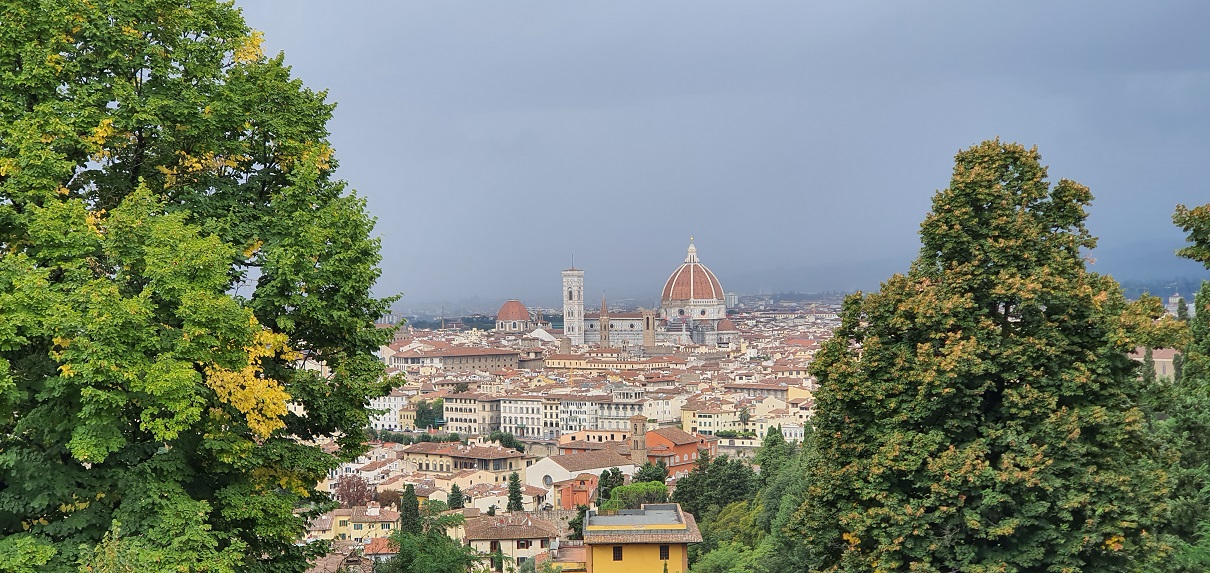
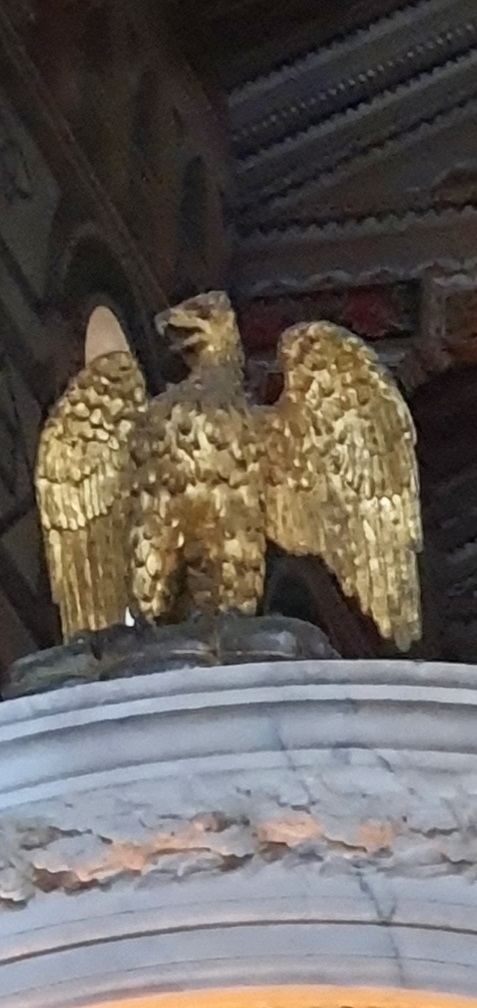
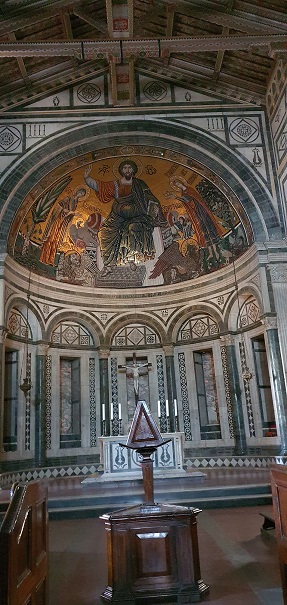
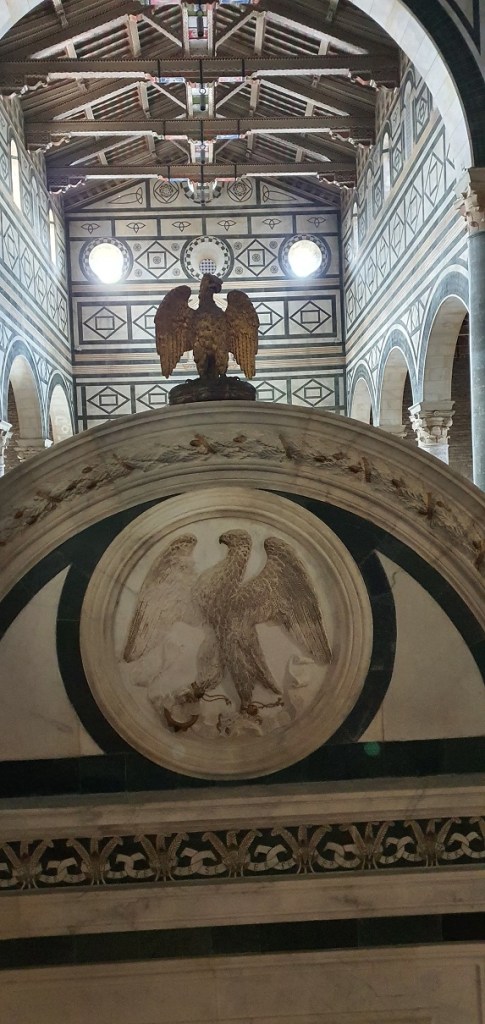
Recently I visited Florence for my work. I had some time to enjoy this beautiful city. So I went for a long walk, a bit outside the city. I visited the San Miniato al Monte. As the name points out, this church is situated on a hill, not far from the city centre. The building of this church began in 1018, and it was completed about 1207. The church is for sure one of the Tuscan Romanesque masterpieces. It is built on the grave of the martyr St. Miniatus. I was impressed by the symbol of the Eagle that you can find in this church and wanted to find out more about that. I found out that the eagles are the emblem of Calimala, the Merchants’ Guild that was responsible for the church’s maintenance from the 13th century onwards. But, the Eagle must mean more than this. In general, Christian churches house more pagan symbols and astrological symbols.
What about the Eagle?
Soaring to the heavens The Eagle has the ability to soar towards the heavens, to 10 000 feet. The wingspan of an eagle can range from 6 to nearly 8 feet wide. When an eagle dives, they are streamlined for speed. They can achieve speeds of up to 100 miles per hour. When they soar, their wings spread wide as they allow the air currents to elevate them.
Symbol of Jesus’ Resurrection and Ascension Because it soars upward, the Eagle is often used as a symbol of Jesus’ Resurrection and Ascension into Heaven.
Symbol of St. John The Eagle is also the symbol used to depict St John. John was one of Jesus’ disciples and wrote one of the four Gospels about the life of Jesus. John’s writing about Jesus is often said to ‘soar’ with inspiration – just like an eagle in flight.
The Divine Because of its ability to soar incredibly high, some traditions say that the Eagle is an intermediary between humans and the Divine or the Great Spirit.
Monogamous animals Like swans, geese, ducks, cranes, storks and a few other big and prey birds, Eagles are monogamous animals who mate for life. Male eagles stay with their female partners to help raise their eaglets. And many eagle pairs return to the same nest year after year. So the Eagle can teach us about loyalty and devotion. I am sure the Christian religion likes the Eagle because of this.
Other symbolic meanings of the Eagle.
Hope and salvation In other cultures, this ability to soar so high in the sky is associated with hope and salvation. In ancient Rome, the Eagle stood for victory. In ancient Greece, it stood for the triumph of good over evil.
Freedom and Independence Because of their flight abilities – speedy diving and high soaring, the Eagle is also associated with freedom and independence – the embodiment of life without restrictions, borders, or limitations.
Truth and Honor – “The truth will set you free.” The Eagle teaches us that when we live in the truth, we will have the power to soar higher than ever imagined. In this context, the truth means being truthful to ourself and others. Being truthful to ourself means living our life’s purpose on Earth and not the life others want to implement on us.
Powerful vision Like owls, hawks, and other birds of prey, eagles have incredibly powerful eyesight. However, unlike owls that hunt at night, eagles hunt during the daylight hours. Their eyes are like a telescope: they can see eight times as far as we can and broaden their view/make a landscape view, but they can also zoom in on prey – they can read a newspaper (if they could read 😊) from two miles away. Furthermore, they can see more colours than we do. In this aspect, the Eagle is a symbol of foresight and psychic awareness. Metaphorically the Eagle can also help us to see things from a viewpoint we usually don’t see.
Family constellations is a method in which the relationships and hidden dynamics between family members are made visible. And even more than making it visible is that a constellation works towards a healing resolution. That is the point where a new, more natural and healing balance for the whole system is found. The point where love between all members can flow again. I like to say that a family constellation works with the family soul or family karma. A constellation reveals what is happening in the family soul and heals that soul.
What do you mean by a family soul / family karma?
Each individual belongs to and is bonded in relationship to other members of his or her family system. Bonded to all family members, even if they have passed away a long time ago or if the person has never known them. Some sufferings that happen in family life can have a huge impact not only on the present family but even on many generations that follow. Some events are known to have this huge impact. Events like a mother or father who dies while there are still small children, a divorce, a child that dies, someone who is rejected from the family, suicide, murder. These life events can lead unconsciously toward destructive familial patterns. Individuals can ‘take on’ destructive patterns of anxiety, depression, anger, guilt, aloneness, addictions and even illness. These individual patterns cannot be understood by events that happened in the past of the individual him or herself. But a constellation can reveal that this pattern comes from entanglement with another family member – even a family member from many generations before. If, for example, a great-grandmother has been very sad because of the death of a child – grief she could never process completely – then you see that one or more family members from next generations take that grief upon their shoulders. They are trying to cry the tears of that great-grandmother. They do this out of love and loyalty. The person himself suffers from grief, but cannot clearly indicate where that comes from. A constellation can show this person the grief is not his or hers but belongs to this great-grandmother. When this insight is gained he or she can release this grief. And this can be true – not only for the inexplicable feeling of grief but also feelings of anger, guilt, shame or fear that cannot be understood well enough from the individual life events. Even destructive behavioral patterns can be a result of entanglements with previous family members. Behaviors like addictions, uncontrolled aggression and so on.
How does a constellation take form?
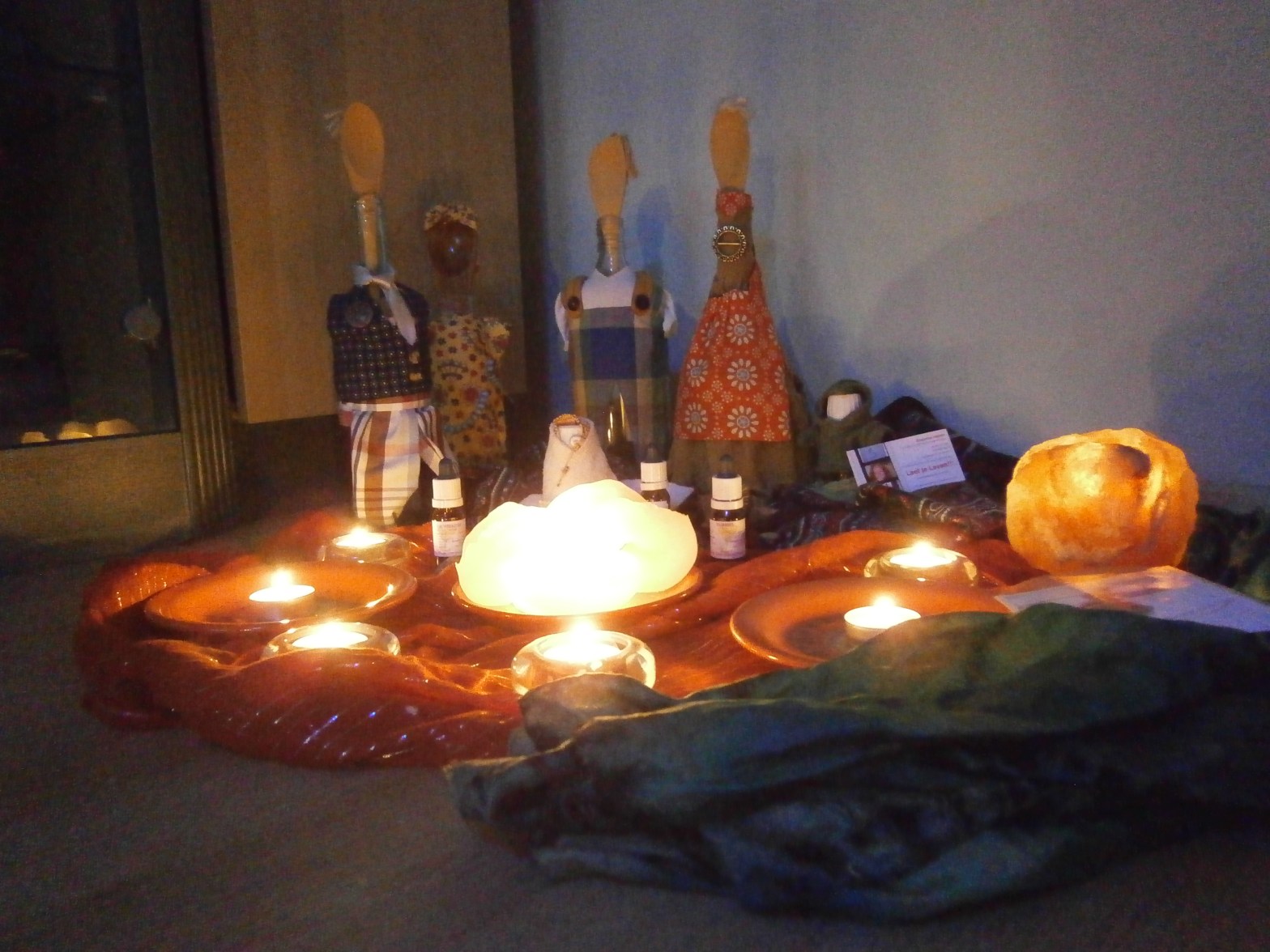
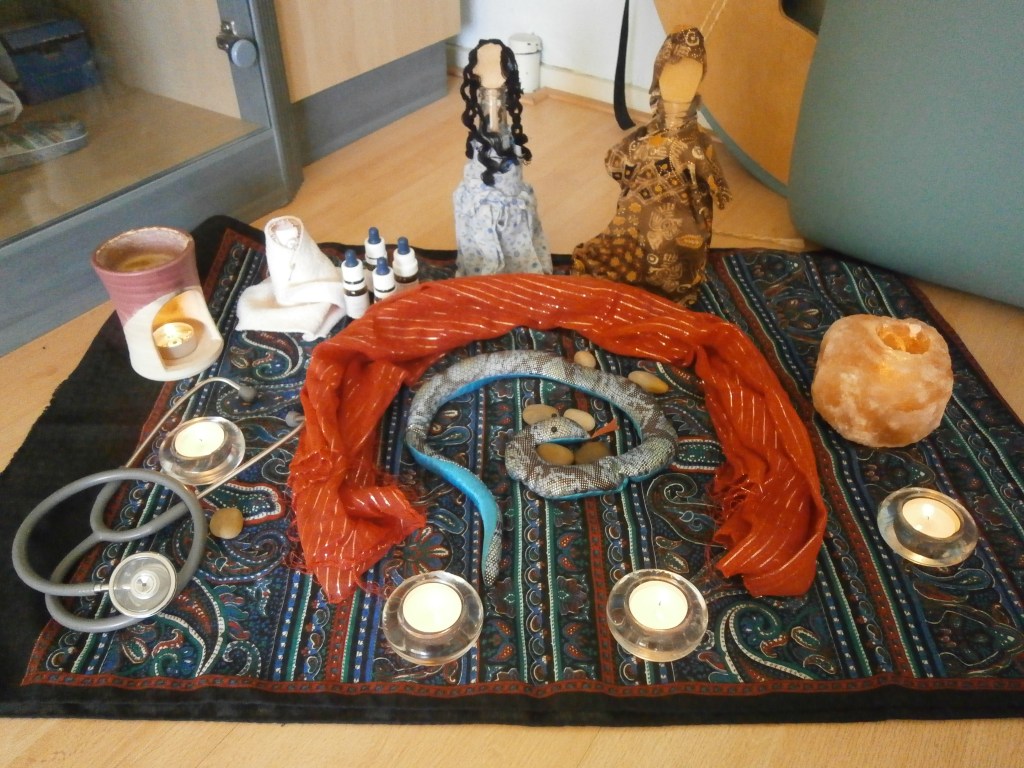
The starting point of a constellation is the personal issue of the ‘client’. A constellation can be done in a group or in an one on one setting. The constellation is led by a facilitator. In my practice, I have a brief interview with the client before the group is involved. In that interview, I want to know more about the issue the client wants to bring in and facts of his family history. I don’t want the other participants of the workshop to hear those facts. Some facilitators take the interview in front of the other participants. After making this inventory I, as a facilitator, suggest which key family members (or other elements involved in the clients question) will be represented in the constellation. Usually this is a representative of the client, one or more family members and an abstract concept such as ‘depression’ of ‘the addiction’ – depends on the issue the client brings in. The client asks people from the group to stand in the constellation as representatives. The client arranges the representatives in space according to what feels right at the moment. In the one on one setting in my practice – I work with puppets – and I as facilitator explore all the elements that are set up.
At the moment the representatives stand in – they will experience feelings and sensations that mirror the members they represent. As a facilitator, I observe their body language accurately. (the body doesn’t lie). With what the representatives have to tell I work. The healing resolution for the issue is achieved after adding some more key members of the system, repositioning the representatives and giving and sharing some healing sentences or ritual actions. The constellation and the healing process is concluded when all the representatives feel comfortable in the reconfigured family system. I often give some homework after a constellation to keep on the healing process.
Does it only work with the person who is doing the constellation or also for the other family members?
A family constellation can bring insight into the dynamic behind the life issue of the client and bring healing to it. So that he can live healthier, happier and have a more fulfilled life. Usually, the benefits of a constellation take some time to unfold.But in a constellation, a whole family system is involved. The moment you restore the system, it will affect the other family members – even if they are unaware of what happened in a constellation. This can manifest itself, for example, as contact between family members is suddenly restored after a constellation.
How does someone know when a family constellation can help or give support?
I always say – when you have a certain problem and you have already looked at it from different perspectives, but it still hasn’t fully disappeared, or when you have a certain problem and you do not know where it comes from – then a constellation can be helpful.
How many constellations does a person need?
The issue of a certain moment can be solved with one constellation, only sometimes more constellations are necessary. And after some period new issues can come up.
How much time is there between different sessions?
I advise at least a time period of 3 months between different sessions.
How is it for a representative to represent?
First of all. Everybody can do that. You don’t need a special gift for this. Many people like to represent. By doing so they help someone else and most of the time helping feels good. It may happen that someone represents a family member of the client with a similar issue as the person himself. Then representing the position of someone else awakens your own issue.
Does it happen that a representative sometimes cannot get rid of the energy he was representing?
That can happen. As the facilitator of a constellation you have to pay attention to that. If it turns out that someone still carries an energy of the constellation, you have to undo that. There are various methods for this.
From various traditions, including shamanic traditions, Sufism, anthroposophy and Hinduism, we know the concept of the human being consisting of several bodies and not just a physical body. Each tradition has its own concept about the physical, gross material, and subtle or energetic bodies. Apart from the physical body, we cannot see those other bodies with our well-known senses. We can observe these energetic bodies, for example, with the help of Systemic Ritual or Shamanic journeys. All bodies need care and nutrition, the bodies are always active, intertwined and they influence each other. When there is a disturbance in one body, it affects the other body.
If you are interested in working with the energetic bodies with help of Systemic Ritual – see:
There is a central ‘something’, a sense of ‘me’ or ‘I’. That is what we call the personality, our mind. It is our human consciousness and morality. The ‘I’ thinks, speaks and determines its actions. The ‘I’ is capable of self-reflection, can change itself and can make plans. The ‘I’ perceives all bodies as a coherent whole. The personality integrates and selects the information and experiences from the other bodies. Only what is essential according to our personality ends up in our consciousness. In this way, our ‘I’ determines what ‘reality’ is, with the eyes of our ‘I’, we perceive the world and interpret the events and the world around us.
That is what we can see and feel. It is our skin, our muscles, our skeleton, our organs and all the neurogenic and hormonal processes that take place in our physical body.
The etheric body
The etheric body is a network of energetic orbits. It covers and penetrates our physical body and provides all our body cells with life energy, also called chi or prana. The meridians of which Traditional Chinese Medicine speaks are part of the etheric body. You can strengthen the physical and etheric body with fresh and healthy food, physical exercise, staying in nature, breathing exercises, acupuncture, QiGong, music, singing. In the chronically ill and dying body, the etheric body is slowly loosening itself. When the etheric body leaves the physical body, the physical body ceases to exist. After the death of the physical body, the etheric body is still present for 6 to 7 days and then disappears itself.
The astral body
In the astral body or aura are all sensations, experiences, feelings, impulses, thoughts and memories. It is the body that feels emotions. The astral body also has a mythical consciousness. That is, it speaks the language of dreams and symbols. Dreams – both when you sleep and daydreams – take place in the astral body. Just like hallucinations. The astral body has no fixed form. It easily changes shape and can even separate itself from the physical body and travel elsewhere. With the astral body, we can absorb the emotions and thoughts of others. It is like a tuning fork that vibrates not only with our own emotions and thoughts but also – unknowingly – responds to emotions and thoughts of other beings in our environment. The astral body can be strengthened by painting and other creative expressions, recalling relevant memories, feeding ourselves with implementing experiences that make us feel good, loving, cheerful. It is weakened by events that make us feel angry or gloomy. Seeing violence or misery is – for our astral body – also a fact. So watching the news or violent films less often or not at all is healthy for the astral body. The astral body can remain independent of the physical body for a long time. Parts of the astral body can leave the ‘I’ for several reasons, f.e. trauma. In some traditions that is called ‘soul loss’. We can call these parts back to the ‘I’ by soul retrieval.
The mental body
The mental body can best be described as a structure that makes thinking possible. So it’s not the thinking or your thoughts themselves. It consists of channels and structures that determine how dreams, thoughts and associations are processed. According to Sufism also some innate personality structures are part of the mental body. The actual expression of the thinking process is done by the personality, the ‘me’ or ‘I’. We find strong patterns in the mental body. Patterns consist of an automatic link between seeing, recognizing and feeling. The mental body has created paths that link past events, beliefs and emotions and lead to “automatic” responses. Neuro-Linguistic Programming, hypnotherapy and affirmations are methods that work with these structures. The mental body can be strengthened by activities that give structure: making puzzles, organizing bookshelves in alphabetical order, rhythmic exercises, meditating to bring calmness and harmony to our thinking.
The soul
The soul is our most profound, pure experience of ‘me, the me that I am, but certainly not our ego. The soul is timeless and formless. According to various traditions, the soul, in turn, consists of several parts; we don’t have one soul but more souls. The soul can be strengthened through meditation, certain types of music f.e. Gregorian chant, experiencing beauty and connection with others and the world around us.
See you soon,
Susanne Hazen.
References: Aaldijk, K. Voeding voor de ziel. Spiegelbeeld, mei 2007 Van Kampenhout, D. Beelden van de ziel. Over de werking van de ziel in sjamanistische rituelen en familieopstellingen http://www.ankh-homeopathie.nl/pagina.php?id=16
Systemic Ritual is a different form of constellation work, enriched with elements of shamanic ritual. Systemic Ritual was developed by Daan van Kampenhout. He specialized in shamanism early in his life. In the 90s he came to know the work of Bert Hellinger – the Family Constellations. He was impressed by the depth and healing effect of family constellations. The similarities and differences between shamanic rituals and family constellations fascinated him. During many years he has explored many combinations of aspects of constellations and elements of shamanic ritual, and out of these two he gradually developed a new method, now called Systemic Ritual®. Some similarities are:
Time plays no role either in a shamanistic ritual or in a constellation. A constellation and ritual take place in space, in the here and now.
The healing effect applies to the whole system and not to one individual.
The healing effect is not so much based on the individual’s capability, but forces from outside are used – for example, an ancestor.
The deaths and the living have a role in family constellations as well as in shamanistic rituals. Both exist in the here and now. The deceased are only in a different ‘dimension’ or ‘world’.
We work with ‘healing sentences’, sentences with an archaic power – that speak to the unconscious and bring about a healing effect.
Both methods make use of representatives and healing sentences and actions.
The influence of shamanism can be seen in the sound of the drum, the ongoing prayers and the use of ground plans and fixed structures that guide the movement of the ritual.
Differences with family constellations
For working with Systemic Ritual, the exact details of a family system are not required.
In Systemic Ritual, compared with family constellations, the emphasis is more on the elements that give strength to a person.
In Systemic Ritual it can happen that people are asked to represent ‘healers’ or to represent power animals with certain qualities or distant ancestors (ancestors from the fifth, sixth or even 20th generation).
In Systemic Ritual we also work with the qualities of the four directions – a concept from shamanism (medicine wheel).
Furthermore Systemic Ritual encompasses different concepts. For instance the concept of the human being having many souls. In Systemic Ritual various souls and layers of the soul can be represented.
Connecting to resources
In Systemic Ritual, a connection is made with ‘resources’ – who or what can give support/strength to the client to enable a healing movement. In Systemic Ritual, people may be asked to represent ‘healers’ or power animals with certain characteristics or distant strength-giving ancestors. In Systemic Ritual, we also work with the qualities of the four directions or the multiple souls or bodies – concepts from several Shamanistic viewpoints.
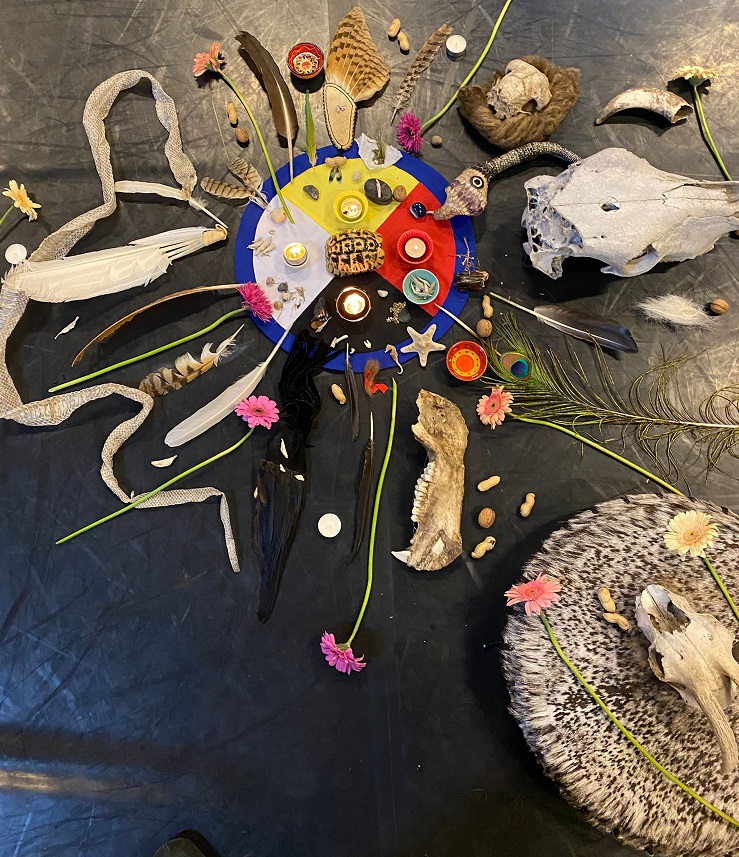
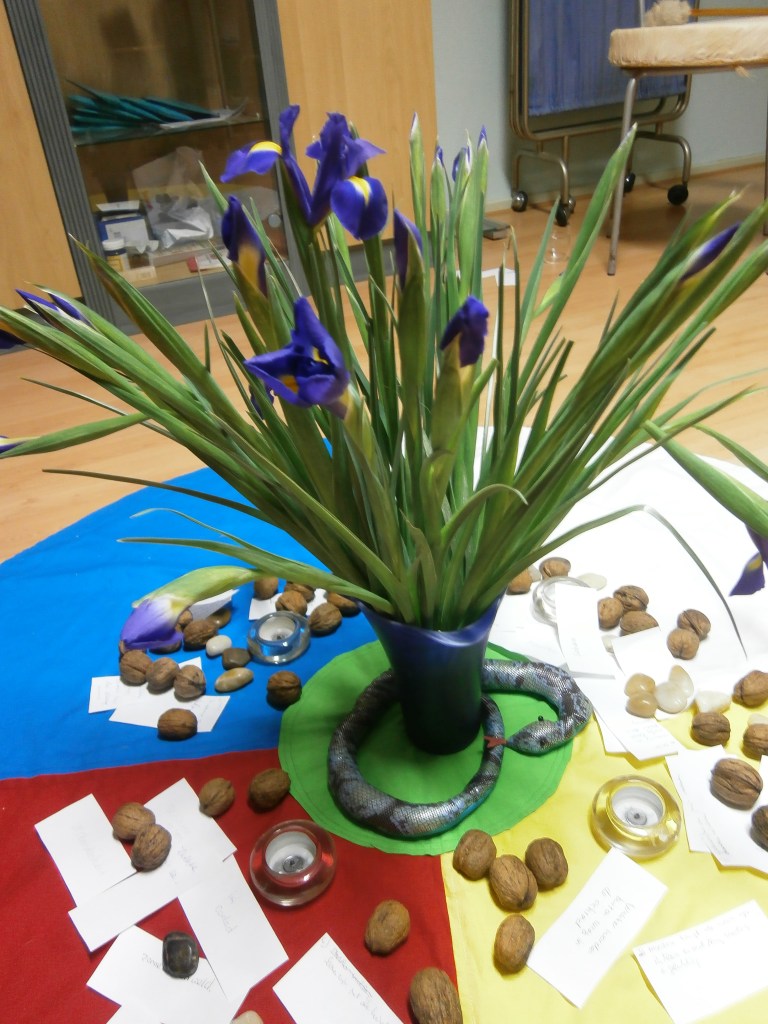
The Wheel of the four directions forms one of the basic ground plans in which a systemic ritual takes place. The Wheel of the four directions works with the qualities of the four cardinal directions, which means no more than the conscious application of the universal cycle of ‘coming’ / ‘being’ / ‘going’ / ‘rest’ and all associated qualities. The Wheel brings order, depth, insight and balance on the mental, emotional and soul levels.
Systemic Ritual is a method that Daan van Kampenhout developed out of thorough research of the combination of constellations and elements of Shamanic Ritual. The aim is to create healing by connecting to more expansive ancestral fields and their resources, strength and support. The focus of a Systemic Ritual is to activate support and resources within or outside ourselves. Like in family constellations, Systemic Ritual uses the method of representation and archaic, healing sentences. Similar to Shamanic rituals, Systemic Ritual is often guided with the sound of the drum, prayers, ground plans, and fixed structures that guide the movements that occur in the ritual. Systemic Ritual doesn’t focus on searching for the origin of an individual- or family problem and offering a solution. That is why for working with Systemic Ritual, knowing the exact details of a family system are not necessary. Systemic Ritual works with the abstract essence of a family story. An individual issue is translated to a collective theme. In that way, all participants can relate to it. This principle also achieves that the rituals not only help integrating individual problems but collective ones. The community is seen as essential in this work. Systemic Ritual recognises and emphasises that an individual never stands alone but is always a part of a community.